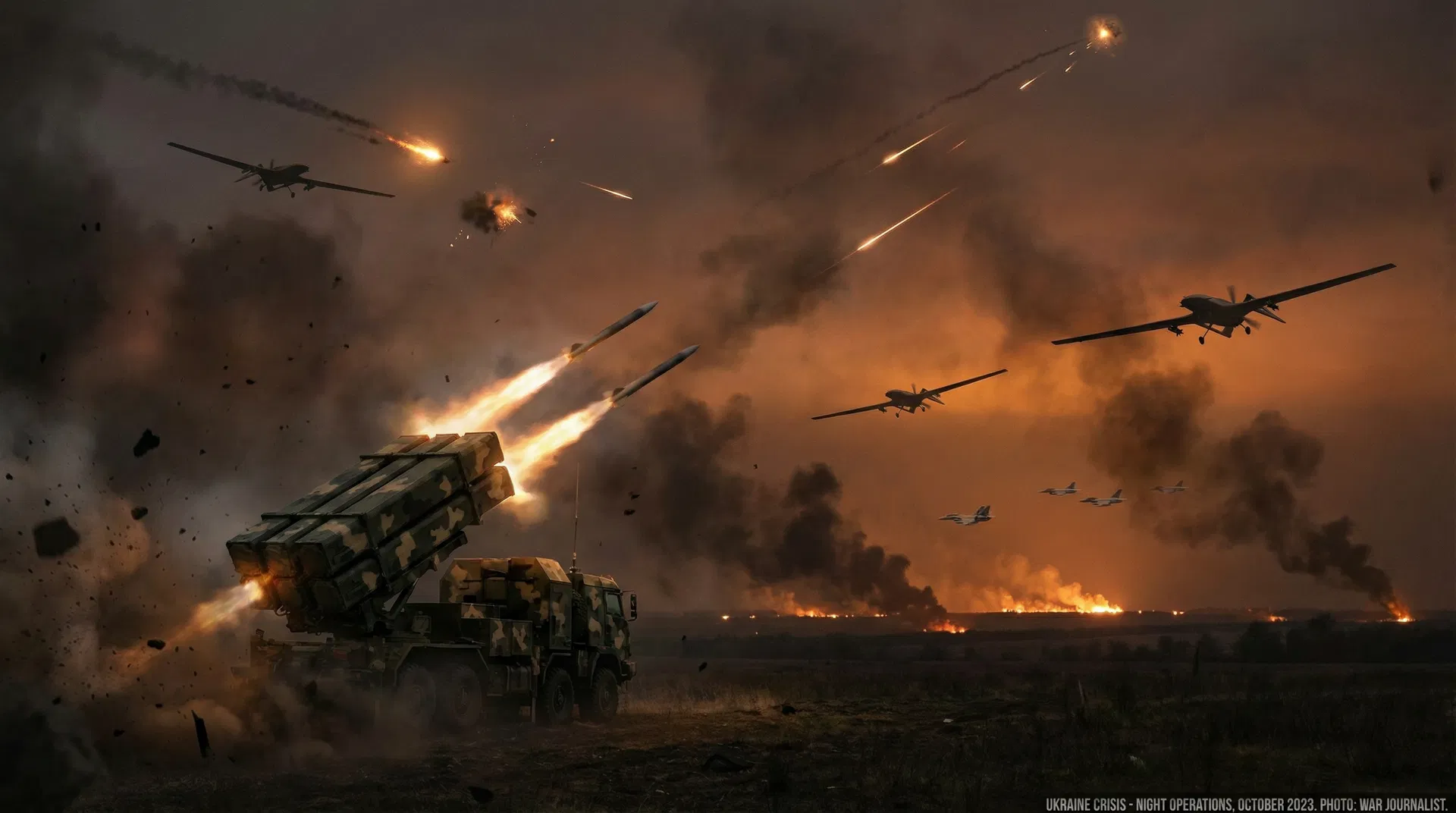
Ukraine War Timeline: From 2014 to 2026 — A Complete History
The Russo-Ukrainian War began in 2014 with the Euromaidan protests and Russia's annexation of Crimea, escalated into a full-scale invasion on February 24, 2022, and has resulted in hundreds of thousands of casualties and millions of displaced persons. The conflict has become the largest conventional war in Europe since World War II, fundamentally reshaping the geopolitical landscape and challenging the post-Cold War international order.
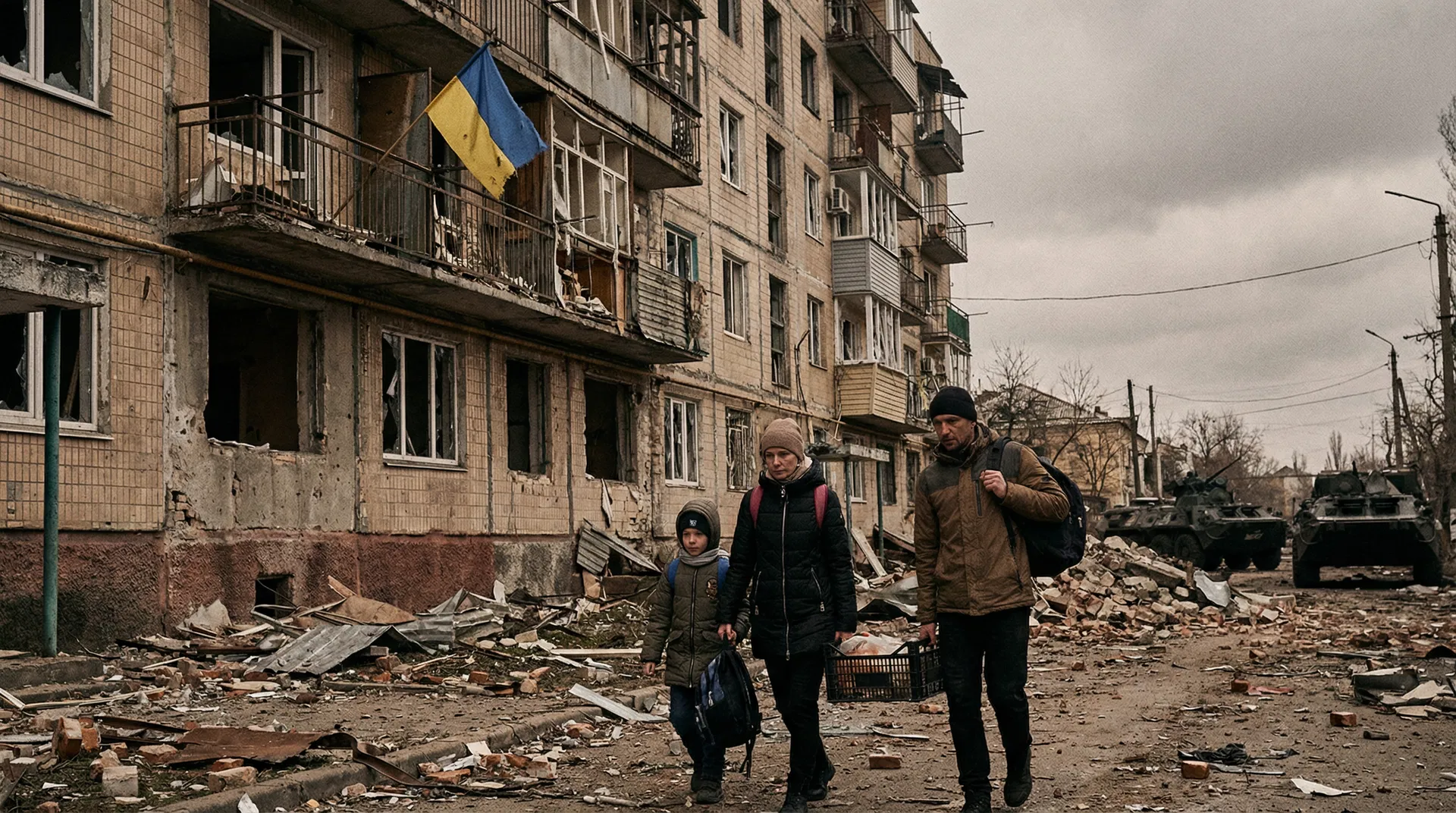
The Russo-Ukrainian War is one of the defining conflicts of the 21st century. What began as a localized crisis in 2014 has evolved into a full-scale military conflict that has reshaped the geopolitical landscape of Europe and challenged the foundations of the international order. The war has resulted in hundreds of thousands of casualties, millions of displaced persons, and economic devastation on a scale not seen in Europe since World War II. Understanding the origins, trajectory, and implications of this conflict is essential for comprehending the current state of global security.
The Spark: Euromaidan and the Revolution of Dignity (2013–2014)
The seeds of the conflict were sown in late 2013 with the Euromaidan protests in Kyiv. These demonstrations erupted after then-President Viktor Yanukovych, under pressure from Russia, abandoned a planned association agreement with the European Union. The protests grew into a wider movement known as the "Revolution of Dignity," as hundreds of thousands of Ukrainians took to the streets to demand closer ties with Europe and an end to corruption and authoritarianism.
The government's violent crackdown on the protesters in February 2014, which resulted in over 100 deaths, galvanized the movement. On February 22, 2014, Yanukovych fled Kyiv, and a new, pro-Western government took power. This democratic uprising would trigger a chain of events that would lead to war.
The Annexation of Crimea (February–March 2014)
Russia responded to the change of government in Kyiv with swift military action. In late February 2014, Russian special forces, initially without insignia (dubbed "little green men" by international media), began to seize control of the Crimean Peninsula. A hastily organized and internationally disputed referendum was held on March 16, 2014, which, according to Russian-backed authorities, resulted in an overwhelming vote in favor of joining Russia. On March 18, 2014, Russia formally annexed Crimea, a move condemned by the international community and unrecognized by the United Nations.
The annexation of Crimea marked a dramatic violation of international law and the Budapest Memorandum on Security Assurances, an agreement signed in 1994 in which Russia, the United States, and the United Kingdom pledged to respect Ukraine's sovereignty and territorial integrity. The international community responded with sanctions, but these proved insufficient to reverse the annexation or deter further Russian aggression.
The War in Donbas (2014–2022)
Following the annexation of Crimea, the conflict shifted to the Donbas region in eastern Ukraine. In April 2014, Russian-backed separatists seized government buildings in the Donetsk and Luhansk oblasts, proclaiming the establishment of the Donetsk People's Republic (DPR) and the Luhansk People's Republic (LPR). This marked the beginning of the War in Donbas, a protracted and bloody conflict characterized by trench warfare, artillery duels, and a heavy toll on civilians.
In an attempt to de-escalate the conflict, a series of diplomatic efforts were undertaken, leading to the signing of the Minsk Agreements. The first, Minsk I, was signed in September 2014 but quickly collapsed. A revised agreement, Minsk II, was brokered in February 2015 by the leaders of Ukraine, Russia, Germany, and France. The agreement called for a ceasefire, the withdrawal of heavy weaponry, and a political settlement that would grant a degree of autonomy to the Donbas region. However, the agreement was never fully implemented, with both sides accusing the other of violations.
The Donbas war settled into a simmering, low-intensity conflict that would claim over 14,000 lives by the end of 2021. The conflict was characterized by static trench lines, artillery bombardment, and periodic flare-ups of fighting. The international community largely accepted this stalemate as a tragic but stable status quo, unaware that Russia was preparing for a far more ambitious military operation.
The 2022 Full-Scale Invasion
On February 24, 2022, Russia launched a full-scale invasion of Ukraine, marking a dramatic escalation of the conflict. In a televised address, President Vladimir Putin announced a "special military operation," with the stated goals of the "demilitarization" and "denazification" of Ukraine. The invasion was met with widespread international condemnation and the imposition of severe sanctions on Russia.
Key Battles and Offensives
The Battle of Kyiv:
In the initial phase of the invasion, Russian forces launched a major offensive towards the Ukrainian capital, Kyiv, from the north, east, and south. However, they met fierce Ukrainian resistance and logistical challenges. After a month of intense fighting, Russian forces withdrew from the Kyiv region in early April 2022, a significant strategic victory for Ukraine.
The Siege of Mariupol:
The port city of Mariupol in southern Ukraine became the scene of a brutal and protracted siege. Russian forces encircled the city, subjecting it to relentless bombardment that resulted in a humanitarian catastrophe. The last Ukrainian defenders, holding out in the Azovstal steel plant, surrendered in May 2022, giving Russia full control of the city.
The Battle for Kherson:
In the south, Russian forces captured the city of Kherson in the early days of the invasion. However, a Ukrainian counteroffensive in the latter half of 2022 put increasing pressure on Russian positions. In November 2022, Ukrainian forces liberated Kherson, the only regional capital captured by Russia since the start of the full-scale invasion.
The Battle of Bakhmut:
The city of Bakhmut in the Donbas region became the epicenter of a grinding and attritional battle that lasted for over a year. Russian forces, heavily reliant on Wagner Group mercenaries, made slow and costly gains, eventually capturing the city in May 2023. The battle for Bakhmut became a symbol of the brutal nature of the war, with both sides suffering heavy casualties.
The 2023–2024 Stalemate and 2025–2026 Developments
Following the intense battles of 2022, the conflict entered a new phase characterized by a grinding stalemate along a vast front line. The much-anticipated Ukrainian counteroffensive in the summer of 2023, while making some tactical gains, failed to achieve a decisive breakthrough of Russian defensive lines. The front lines remained largely static throughout 2024, with both sides engaged in a war of attrition, relying heavily on artillery, drones, and trench warfare.
By 2025, the international landscape had shifted. The outbreak of the US-Iran war on February 28, 2026, diverted significant attention and resources from the conflict in Ukraine. This created both challenges and opportunities for Ukraine and its allies. While the US remained a key supporter of Ukraine, the new conflict in the Middle East strained its military and financial resources.
Related Reports
Ukraine and Russia Accuse Each Other of Breaching Easter Ceasefire as War Enters Fifth Year
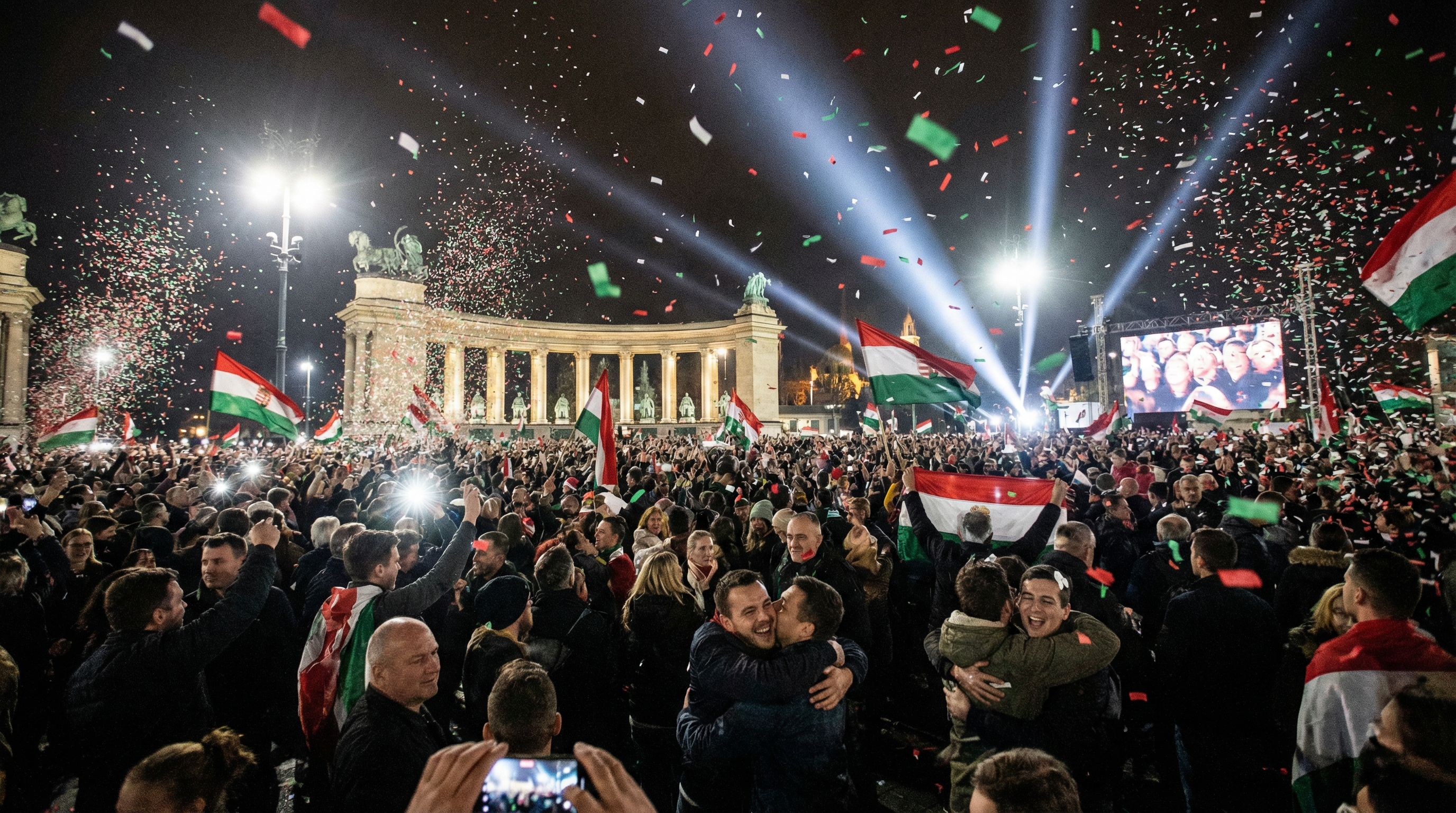
Orban Era Ends: Hungarian Prime Minister Defeated in Historic Election by Peter Magyar