Iran Warns of 'Long War' as Oil Surges Past $100 Amid Gulf Attacks

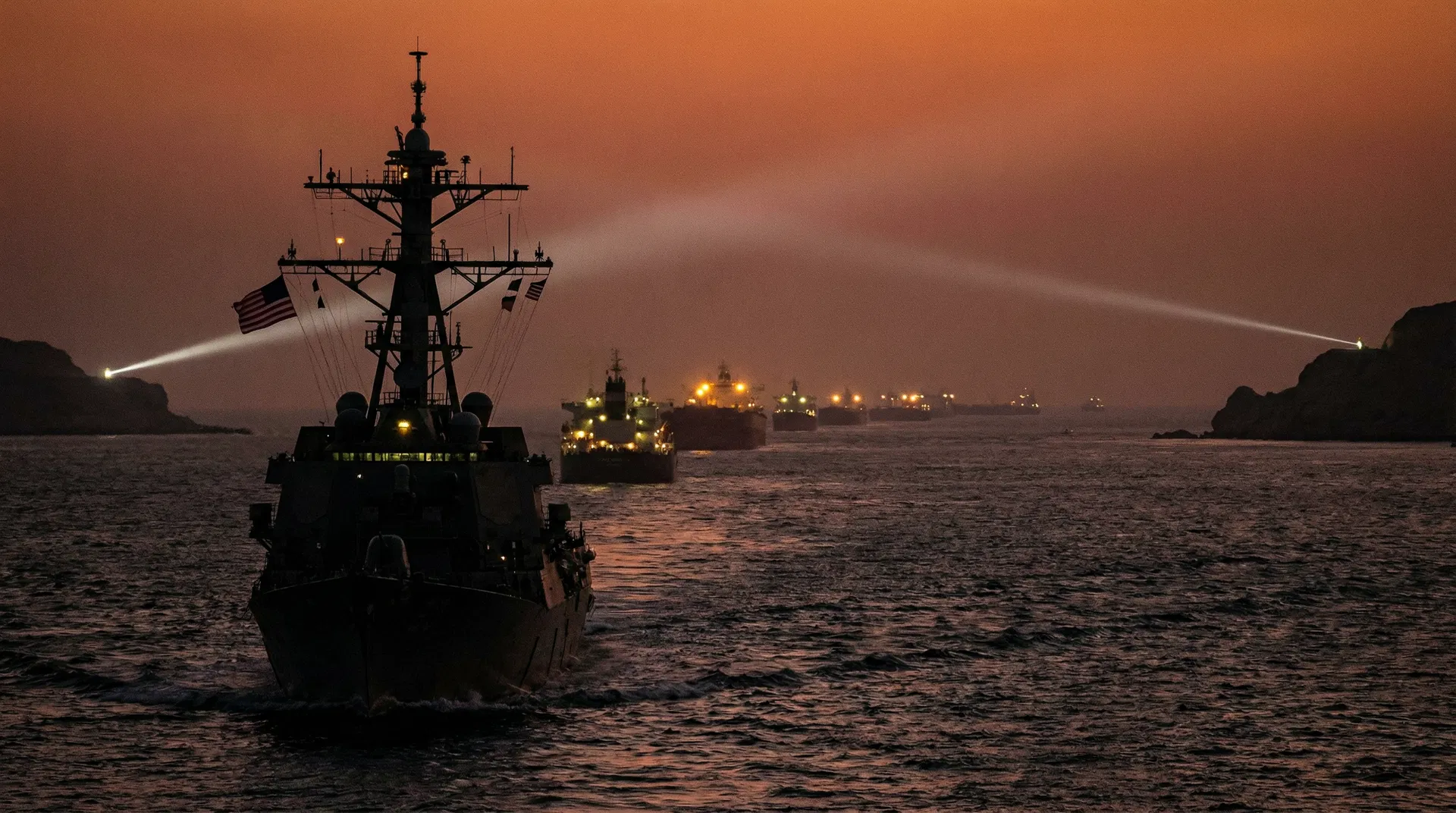
Iran has warned it is prepared for a prolonged war of attrition that could destroy the global economy. Oil prices have surged past $100/barrel as the Strait of Hormuz is effectively closed to shipping, and IEA nations have released 400 million barrels from strategic reserves.
The ongoing conflict between the United States, Israel, and Iran has entered its twelfth day, marked by a dramatic escalation in both military operations and economic brinkmanship. Iran's leadership has issued a stark warning: the US and Israel must brace for a prolonged war of attrition that could devastate not only the American economy but the global financial system as a whole. This declaration, combined with Iran's effective closure of the Strait of Hormuz, has sent shockwaves through international energy markets and diplomatic circles alike.
At the heart of Iran's economic strategy is the Strait of Hormuz, a narrow waterway connecting the Persian Gulf to the Gulf of Oman. This chokepoint handles approximately 20% of the world's oil supply and a third of global fertilizer shipments. By deploying a combination of missile strikes, drone barrages, and naval mine-laying, Iran has brought shipping through the passage almost to a standstill, triggering a surge in Brent crude oil prices back above the $100 per barrel mark for the first time in years.
Ali Fadavi, a senior adviser to the Islamic Revolutionary Guard Corps (IRGC) commander-in-chief, articulated Tehran's strategic calculus in stark terms. Speaking on state television, Fadavi warned that the US and Israel 'must consider the possibility that they will be engaged in a long-term war of attrition that will destroy the entire American economy and the world economy.' This was not mere rhetoric; Iran simultaneously struck two commercial vessels in the Gulf—a Thai bulk carrier, the Mayuree Naree, and a Liberia-flagged ship—after they allegedly ignored naval warnings, sending black smoke billowing across the strait.
The economic fallout has been swift and severe. In an emergency response, member states of the International Energy Agency (IEA) agreed to release a record 400 million barrels of oil from their strategic reserves. IEA executive director Fatih Birol acknowledged the gravity of the situation, stating that while the reserve release was 'a major action,' the only true path to market stability was the resumption of safe transit through the Strait of Hormuz. Goldman Sachs analysts have warned that without a resolution, oil prices could breach $150 per barrel by month's end.
Iran's President Masoud Pezeshkian has outlined three conditions for ending the conflict: recognition of Iran's legitimate rights, payment of reparations, and firm international guarantees against future aggression. These demands signal that Tehran is negotiating from a position of defiance rather than desperation. Meanwhile, the IRGC has vowed to expand its campaign, threatening to target 'economic centres and banks' linked to US and Israeli interests—a move that has prompted major international firms, including Citi, to evacuate staff from Dubai.
The conflict has spread across the Gulf region with alarming speed. Saudi Arabia has intercepted multiple waves of Iranian drones and ballistic missiles, including projectiles aimed at the Shaybah oilfield, which has a production capacity of one million barrels per day. In Kuwait, six electricity transmission lines went offline after drone debris fell on infrastructure. Drones struck fuel tanks at Oman's Salalah port, and four people were injured when drones fell near Dubai's international airport—a vivid illustration of how the conflict is threatening the Gulf's twin economic pillars: energy production and commercial aviation.
Humanitarian consequences have been severe and continue to worsen. Iran has reported over 1,300 civilian deaths and nearly 10,000 civilian sites bombed since the conflict began on February 28, when US and Israeli forces launched strikes that killed Supreme Leader Ali Khamenei. Lebanon, drawn into the war by Hezbollah's retaliatory rocket attacks on Israel, has recorded over 634 deaths and more than 800,000 displaced persons. The United States has sustained its own casualties, with seven service members killed and 140 wounded during Operation Epic Fury. The World Health Organization has issued warnings about 'black rain'—toxic precipitation formed when smoke from burning Iranian fuel depots mixes with rain clouds.
In a significant escalation, Israeli drones carried out strikes in Tehran on the evening of March 11, killing members of Iran's security forces—the first such direct attack on the Iranian capital since the war began. Earlier, Israeli forces bombed a residential building on Beirut's waterfront, killing eight people and wounding 31. Israel has justified these strikes as responses to Hezbollah rocket barrages, which have injured hundreds of Israelis and displaced communities across northern Israel.
The international community has responded with growing alarm. The UN Security Council passed a resolution calling on Iran to immediately halt its attacks on Gulf states. French President Emmanuel Macron urged G7 leaders to act urgently to restore navigation through the Strait of Hormuz. Saudi Aramco's CEO described the crisis as 'the biggest crisis the region's oil and gas industry has faced.' European energy strategists have warned that the continent's plan to replace Russian energy supplies with Gulf imports is now 'in tatters,' with gas storage levels already low after a cold winter.
US President Donald Trump has sought to project confidence, claiming there is 'practically nothing left to target' in Iran and that the war will end 'soon.' However, Israeli military spokesman Brigadier-General Effie Defrin struck a different tone, stating that Israel 'will expand our operations' and that a 'broad bank of targets' remains. US intelligence assessments, meanwhile, indicate that Iran's government is stable and not at risk of collapse, complicating any expectation of a swift political resolution. Ukrainian anti-drone teams, experienced in countering Iranian-style drones, are now operating in Qatar, the UAE, and Saudi Arabia.
As the conflict enters its third week, the prospect of a swift resolution appears increasingly remote. Iran's leadership has laid out stringent peace conditions while demonstrating a willingness to sustain asymmetric attacks on global energy infrastructure. The United States and Israel continue to press their military advantages, yet the human and economic costs are mounting by the hour. With oil markets volatile, Gulf states under fire, and the Strait of Hormuz effectively weaponized, the world is confronting the most serious disruption to global energy supplies in modern history—one whose full consequences are only beginning to unfold.
Frequently Asked Questions
Why are oil prices surging above $100?
What is the Strait of Hormuz and why is it important?
What has Iran warned about the current conflict?
How is the international community responding to the oil crisis?
Related Reports
US-Iran Ceasefire Talks Collapse: US Navy Blockades Iranian Ports as Fragile Truce Holds
Israel Escalates Lebanon Campaign as Ceasefire Excludes Hezbollah Ahead of Washington Talks