BREAKING
US-Israel War on Iran Escalates: Intense Airstrikes, Civilian Toll, and Strait of Hormuz MinedStrait of Hormuz Crisis: Iran Lays Mines, Oil Shipping Halts, and Global Energy Prices SurgeIran Warns of 'Long War' as Oil Surges Past $100 Amid Gulf AttacksTrump Predicts Iran War Will End 'Soon' as Dubai Airport Hit in Drone AttackStrait of Hormuz Under Siege: Iran's Escalation Drives Oil to $100 Amid US-Iran WarUN Declares Russia's Deportation of Ukrainian Children a Crime Against HumanityTrump Lifts Russia Oil Sanctions to Help Oil Flow Amid Iran WarIsrael Launches Devastating Strikes on Beirut in Expanding Lebanon CampaignIran War Reshaping Strait of Hormuz: Global Energy Security at Critical JunctureIran Dismisses Trump's Ceasefire Claim as Dubai Airport Erupts in Drone-Strike FireNATO Deploys Maritime Strike Group to Strait of Hormuz Amid Iran StandoffChina Conducts Largest Military Exercises Near Taiwan Since 2022Iran Declares Ukraine a 'Legitimate Target' as Kyiv Sends Drone Experts to GulfEurope and NATO Reject Trump's Hormuz Coalition: 'This Is Not Our War'Iran Declares Ukraine a 'Legitimate Target' as Kyiv Sends Drone Experts to GulfTrump Extends Hormuz Deadline as US-Iran Impasse DeepensRussia Unleashes Massive Spring Offensive as Iran War Diverts US FocusUS Deploys 82nd Airborne to Middle East as Iran War EscalatesG7 Ministers Confront Dual Wars in Iran and Ukraine Amidst Deepening DivisionsIran War Triggers Worst Global Trade Rupture in 80 YearsMiddle East War Shows No Signs of Winding Down as International Norms UpendedUS-Iran Ceasefire Talks Collapse: US Navy Blockades Iranian Ports as Fragile Truce HoldsIsrael Escalates Lebanon Campaign as Ceasefire Excludes Hezbollah Ahead of Washington TalksUS-Israel War on Iran Escalates: Intense Airstrikes, Civilian Toll, and Strait of Hormuz MinedStrait of Hormuz Crisis: Iran Lays Mines, Oil Shipping Halts, and Global Energy Prices SurgeIran Warns of 'Long War' as Oil Surges Past $100 Amid Gulf AttacksTrump Predicts Iran War Will End 'Soon' as Dubai Airport Hit in Drone AttackStrait of Hormuz Under Siege: Iran's Escalation Drives Oil to $100 Amid US-Iran WarUN Declares Russia's Deportation of Ukrainian Children a Crime Against HumanityTrump Lifts Russia Oil Sanctions to Help Oil Flow Amid Iran WarIsrael Launches Devastating Strikes on Beirut in Expanding Lebanon CampaignIran War Reshaping Strait of Hormuz: Global Energy Security at Critical JunctureIran Dismisses Trump's Ceasefire Claim as Dubai Airport Erupts in Drone-Strike FireNATO Deploys Maritime Strike Group to Strait of Hormuz Amid Iran StandoffChina Conducts Largest Military Exercises Near Taiwan Since 2022Iran Declares Ukraine a 'Legitimate Target' as Kyiv Sends Drone Experts to GulfEurope and NATO Reject Trump's Hormuz Coalition: 'This Is Not Our War'Iran Declares Ukraine a 'Legitimate Target' as Kyiv Sends Drone Experts to GulfTrump Extends Hormuz Deadline as US-Iran Impasse DeepensRussia Unleashes Massive Spring Offensive as Iran War Diverts US FocusUS Deploys 82nd Airborne to Middle East as Iran War EscalatesG7 Ministers Confront Dual Wars in Iran and Ukraine Amidst Deepening DivisionsIran War Triggers Worst Global Trade Rupture in 80 YearsMiddle East War Shows No Signs of Winding Down as International Norms UpendedUS-Iran Ceasefire Talks Collapse: US Navy Blockades Iranian Ports as Fragile Truce HoldsIsrael Escalates Lebanon Campaign as Ceasefire Excludes Hezbollah Ahead of Washington Talks
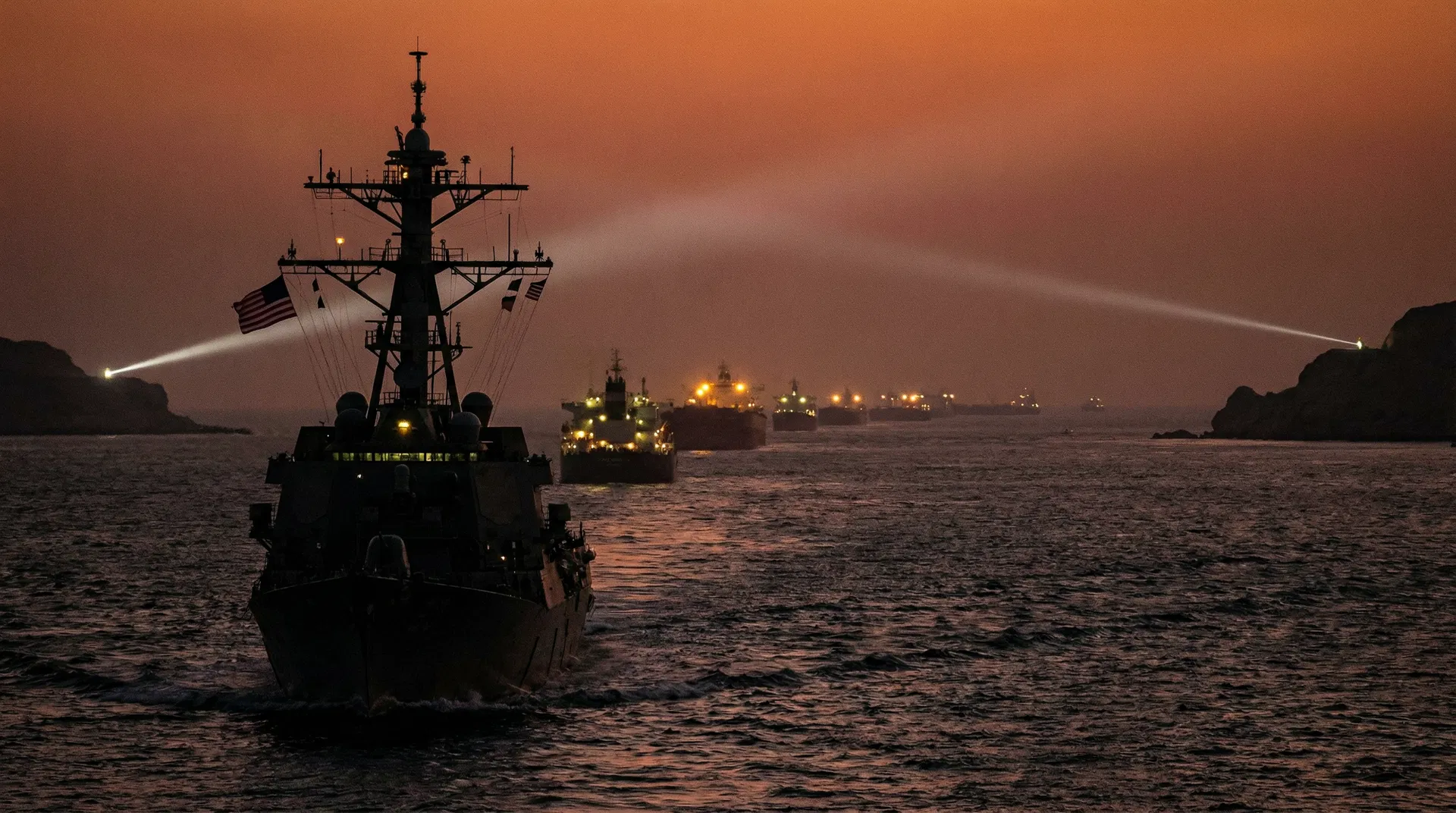
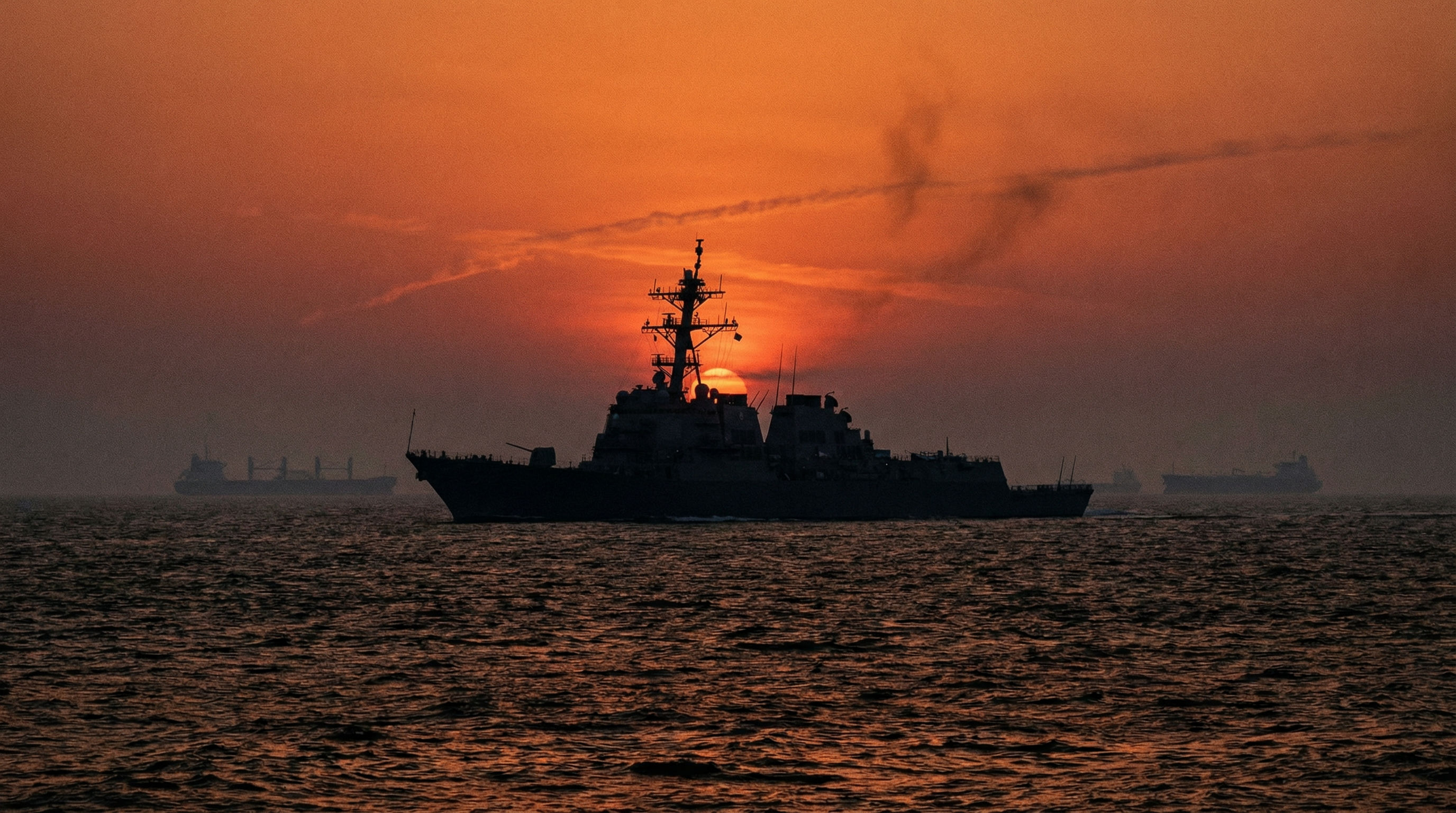
US Navy destroyer silhouetted against sunset in the Persian Gulf near the Strait of Hormuz
Image: AI-generated illustration, The Conflict Desk
Middle EastBreaking

US-Iran Ceasefire Talks Collapse: US Navy Blockades Iranian Ports as Fragile Truce Holds

Sarah Mitchell
Sarah MitchellDefence & Security Analyst
Published April 13, 2026
8 min read
Listen to Article
Share
Key Takeaways

Historic face-to-face talks between the United States and Iran in Islamabad have collapsed without an agreement to end the 40-day war. In response, US President Donald Trump ordered a naval blockade of Iranian ports, sending global oil prices surging past $104 a barrel as the April 22 ceasefire expiration looms.

The unprecedented two-week ceasefire between the United States and Iran, brokered by Pakistani Prime Minister Shehbaz Sharif, faces an uncertain future following the collapse of high-level negotiations in Islamabad. The temporary halt to hostilities, which went into effect on April 8, paused a devastating 40-day conflict that had killed over 3,000 people in Iran and disrupted global energy markets.

The talks represented the highest-level diplomatic engagement between Washington and Tehran since the 1979 Islamic Revolution. Vice President JD Vance led the American delegation, while Iranian parliament speaker Mohammad Bagher Qalibaf headed the Iranian team. Despite 21 hours of intense negotiations, the two sides failed to bridge fundamental differences, primarily concerning Iran's nuclear program.

According to US officials, the negotiations faltered over American demands that Iran completely dismantle its major uranium enrichment facilities and commit to never obtaining a nuclear weapon. "We need to see an affirmative commitment that they will not seek a nuclear weapon," Vice President Vance stated following the collapse of the talks. Iranian officials countered that the American demands represented severe overreach, with Qalibaf warning, "If you fight, we will fight."

In immediate retaliation for the failed talks, US President Donald Trump announced a naval blockade of Iranian ports. The US Central Command confirmed the blockade would commence on Monday morning, targeting all vessels entering or leaving Iranian ports while allowing non-Iranian traffic to continue transiting the strategic Strait of Hormuz.

The announcement sent immediate shockwaves through global energy markets. US crude oil prices jumped 8% to $104.24 per barrel, while the international benchmark Brent crude rose 7% to $102.29. Prior to the outbreak of the war in late February, Brent crude was trading at approximately $70 per barrel. The Strait of Hormuz remains a critical chokepoint, historically handling roughly 20% of the world's oil transit.

The Iranian Revolutionary Guard swiftly responded to the blockade announcement, declaring that the strait remains under Iran's "full control." While they stated the waterway remains open for non-military vessels, they warned that any military presence would receive a "forceful response."

Despite the setback in Islamabad, international mediators continue working to salvage the peace process before the ceasefire expires on April 22. Pakistani Foreign Minister Ishaq Dar indicated his country would attempt to facilitate renewed dialogue in the coming days. The European Union has strongly urged further diplomatic efforts, while Oman has called on all parties to make "painful concessions."

Inside Iran, the civilian population faces exhaustion after months of political unrest followed by weeks of US and Israeli bombardment. The conflict has also drawn in neighboring nations, with Israeli strikes continuing in Lebanon despite the broader US-Iran pause. The Russian President Vladimir Putin has also "emphasized his readiness" to help bring about a diplomatic settlement in a call with Iran's president.

Frequently Asked Questions

Why did the US-Iran ceasefire talks fail?
The negotiations collapsed primarily over disagreements regarding Iran's nuclear program. The US demanded an end to uranium enrichment and the dismantling of major facilities, which Iranian negotiators rejected as overreach.
What does the US naval blockade of Iranian ports entail?
The US Navy is blockading all ships entering or leaving Iranian ports starting Monday at 10 AM EDT. However, vessels traveling between non-Iranian ports are still permitted to transit the Strait of Hormuz.
How has this affected global oil prices?
Following the blockade announcement, US crude rose 8% to over $104 per barrel, and Brent crude rose 7% to over $102 per barrel, up from roughly $70 before the war began.
What happens when the ceasefire expires on April 22?
It remains unclear. Both sides have threatened military action if their demands are not met, though international mediators from Pakistan, Oman, and the EU are attempting to restart dialogue.
Tags:IranUnited StatesCeasefireStrait of HormuzOil PricesDonald TrumpNaval Blockade
Last Updated: April 13, 2026

Related Reports

We use cookies to improve your experience and analyze site traffic. By continuing, you agree to our Privacy Policy.