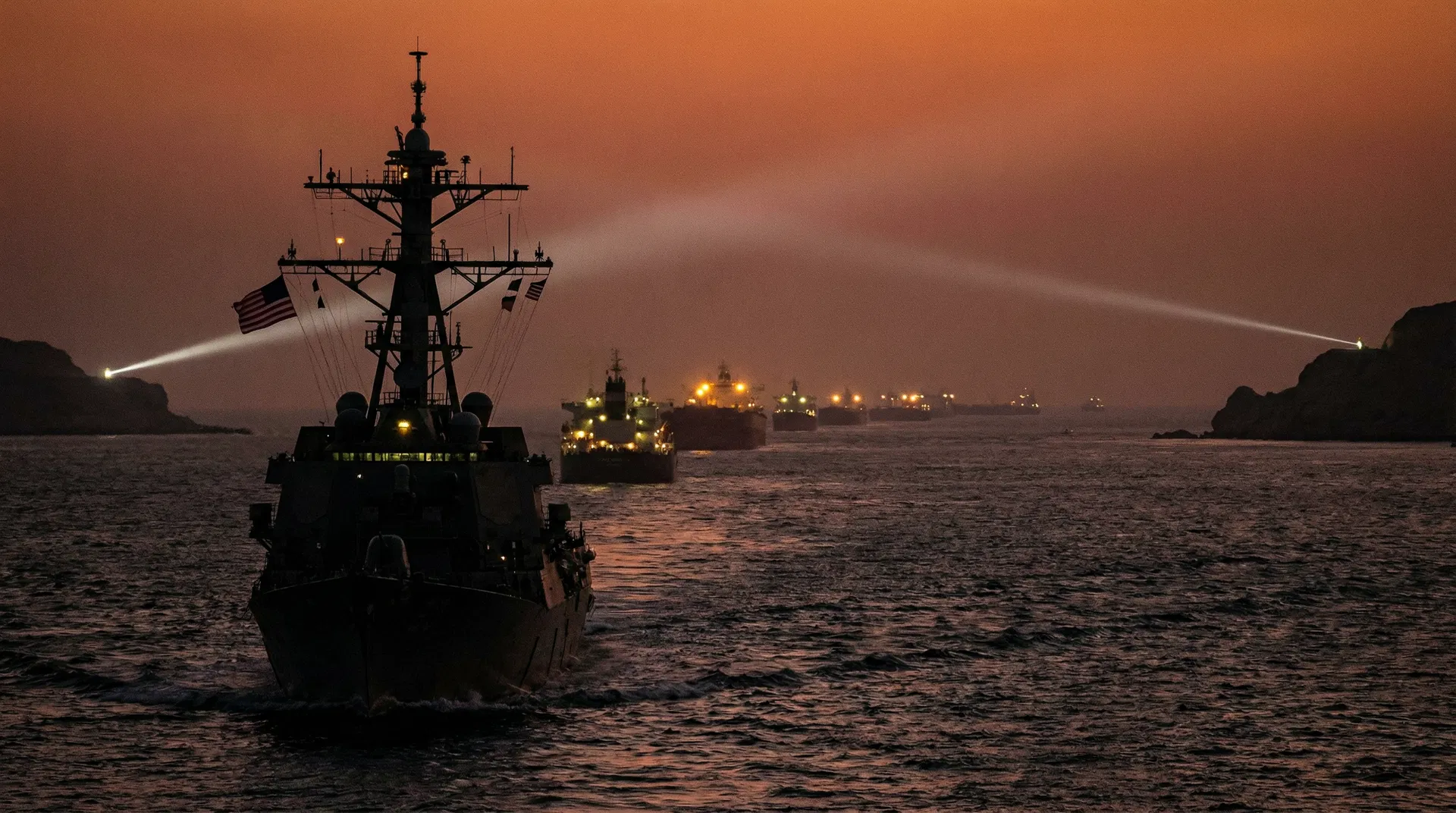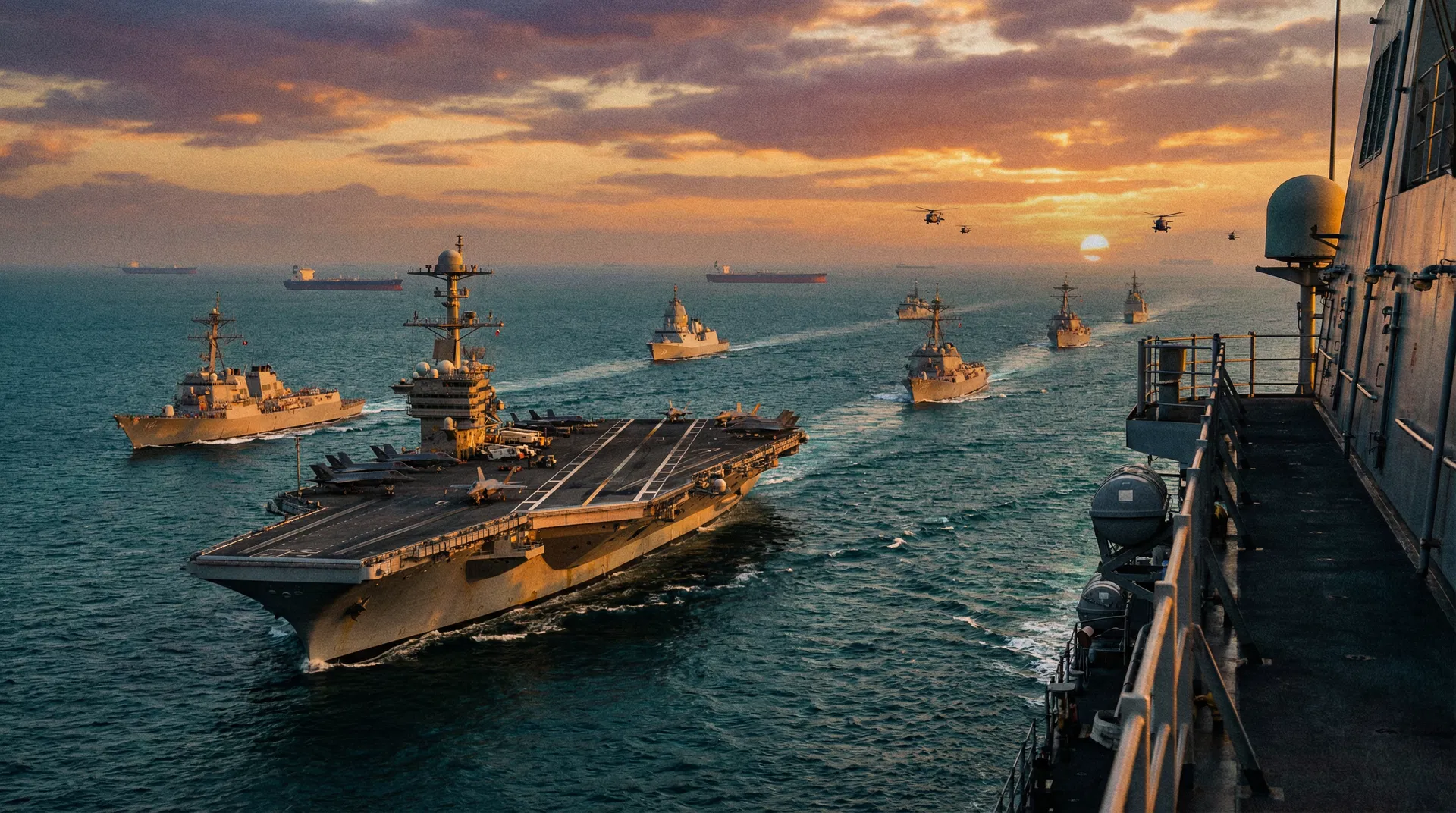
NATO Deploys Maritime Strike Group to Strait of Hormuz Amid Iran Standoff

A US-Israeli surprise attack on Iran, killing Supreme Leader Ali Khamenei, has triggered a full-blown conflict. Iran has closed the Strait of Hormuz, a vital oil route, causing global economic turmoil. NATO allies are hesitant to join a US-led coalition to reopen the strait, revealing a fractured transatlantic alliance.
Persian Gulf in Turmoil: US-Israeli Strike on Iran Ignites War, Strait of Hormuz Blockaded
March 17, 2026
A surprise military intervention by the United States and Israel in Iran has plunged the Persian Gulf into a full-blown conflict, threatening to destabilize the entire region and sending shockwaves through the global economy. The initial airstrikes on February 28, 2026, which resulted in the death of Iran's Supreme Leader, Ali Khamenei, and other senior officials, have been met with fierce retaliation, including the complete closure of the Strait of Hormuz, a critical artery for the world's oil supply.
In the weeks following the initial attack, the world has watched with bated breath as the conflict escalates. Iran, under a new and untested leadership, has unleashed a barrage of missile and drone attacks against Israeli cities and American military bases across the Middle East. The most significant and impactful of Iran's responses, however, has been the strategic closure of the Strait of Hormuz, a chokepoint through which nearly a third of the world's seaborne oil passes. This move has caused an immediate and dramatic spike in global oil prices, raising fears of a worldwide recession.
A Fractured Alliance: NATO's Hesitation
In response to the blockade, the United States has called for the formation of a multinational naval coalition to reopen the strait, a move reminiscent of past international efforts to secure vital waterways. However, the call has been met with a lukewarm reception from key NATO allies. The United Kingdom, France, and Germany, all major European powers, have so far declined to commit military assets, citing a need for greater clarity on the strategic objectives of the Trump administration's campaign against Iran. This reluctance highlights a significant and growing rift within the transatlantic alliance, with European leaders wary of being drawn into a conflict they view as being driven by a maximalist and unpredictable US policy.
"The reluctance of NATO allies to join a US-led naval coalition is not surprising," states a recent report from Chatham House. "European powers are wary of being drawn into a conflict that they see as being driven by a maximalist US policy towards Iran. They are also concerned about the potential for a wider regional war that would have devastating consequences for their own security and economic interests."
The European Union is exploring alternative solutions, with foreign ministers meeting on March 15 to discuss the possibility of expanding the mandate of Operation Aspides, their existing naval mission in the Red Sea, to include the Strait of Hormuz. This move, however, falls short of the direct military intervention sought by Washington and underscores the deep divisions within the Western bloc.
Strategic Implications: A New Era of Conflict
The 2026 Iran war marks a dangerous new chapter in the long-standing shadow war between Iran and the US-Israel axis. The conflict has moved beyond proxy battles and covert operations into the realm of direct, state-on-state military confrontation. The assassination of Iran's Supreme Leader has created a power vacuum in Tehran, and the long-term consequences of this move remain uncertain. As one expert from the RAND Corporation noted, "The U.S.-Israeli military strikes on Iran have sent shockwaves across the region and beyond. The assassination of the Supreme Leader is a high-risk, high-reward strategy that could either precipitate a collapse of the regime or galvanize a nationalist backlash and a more aggressive Iranian posture."
Iran's closure of the Strait of Hormuz is a calculated act of asymmetric warfare. Lacking the conventional naval power to challenge the United States directly, Iran is leveraging its control over this vital chokepoint to inflict maximum economic pain on the global community. This strategy is designed to create leverage and pressure international actors to intervene and de-escalate the conflict on terms more favorable to Tehran. The move has already had a significant impact, with oil prices soaring and global financial markets experiencing increased volatility.
The Human Cost of War
Beyond the geopolitical and economic ramifications, the conflict is exacting a heavy human toll. The initial US-Israeli airstrikes and subsequent Iranian counter-attacks have resulted in thousands of casualties and widespread destruction of civilian infrastructure. Human rights organizations report a rising death toll, with many more injured. The United Nations High Commissioner for Refugees (UNHCR) estimates that as many as 3.2 million people have been internally displaced within Iran, fleeing the violence in urban centers. The disruption of essential services, including healthcare, water, and electricity, has created a severe humanitarian crisis, exacerbated by shortages of food and medicine resulting from the blockade.
What This Means: A Look Ahead
The 2026 Iran war has pushed the Middle East to the brink of a regional conflagration with potentially catastrophic consequences. The conflict has exposed deep fissures within the Western alliance, raising questions about the future of NATO and the liberal international order. The immediate challenge is the reopening of the Strait of Hormuz, but the larger and more complex issue is the lack of a clear diplomatic off-ramp. With both sides locked in a cycle of escalation, the path to de-escalation remains elusive. The world is now faced with the grim reality of a new and dangerous era of great power competition, with the Persian Gulf as its volatile epicenter. The coming weeks and months will be critical in determining whether this conflict can be contained or if it will spiral into a wider war with devastating global consequences.
Frequently Asked Questions
What caused the 2026 Iran war?
Why is the Strait of Hormuz so important?
Why are NATO allies reluctant to get involved?
Related Reports
US-Iran Ceasefire Talks Collapse: US Navy Blockades Iranian Ports as Fragile Truce Holds
Israel Escalates Lebanon Campaign as Ceasefire Excludes Hezbollah Ahead of Washington Talks