Iran Dismisses Trump's Ceasefire Claim as Dubai Airport Erupts in Drone-Strike Fire

Iran's Foreign Minister Abbas Araghchi flatly denied on Sunday that Tehran had ever sought a ceasefire with Washington, contradicting President Trump's claims of diplomatic back-channels, as Iranian drone strikes ignited a major fire near Dubai International Airport. The UAE confirmed it was responding to the blaze, marking the first direct strike on Gulf commercial infrastructure since the war began on February 28.
BEIRUT — On the seventeenth day of the US-Israel war on Iran, the conflict's geography expanded with brutal clarity: a drone-triggered fire erupted near Dubai International Airport, the world's busiest international hub, as Iran's top diplomat stood before cameras to deliver a message that shattered any lingering hope of a swift diplomatic resolution.
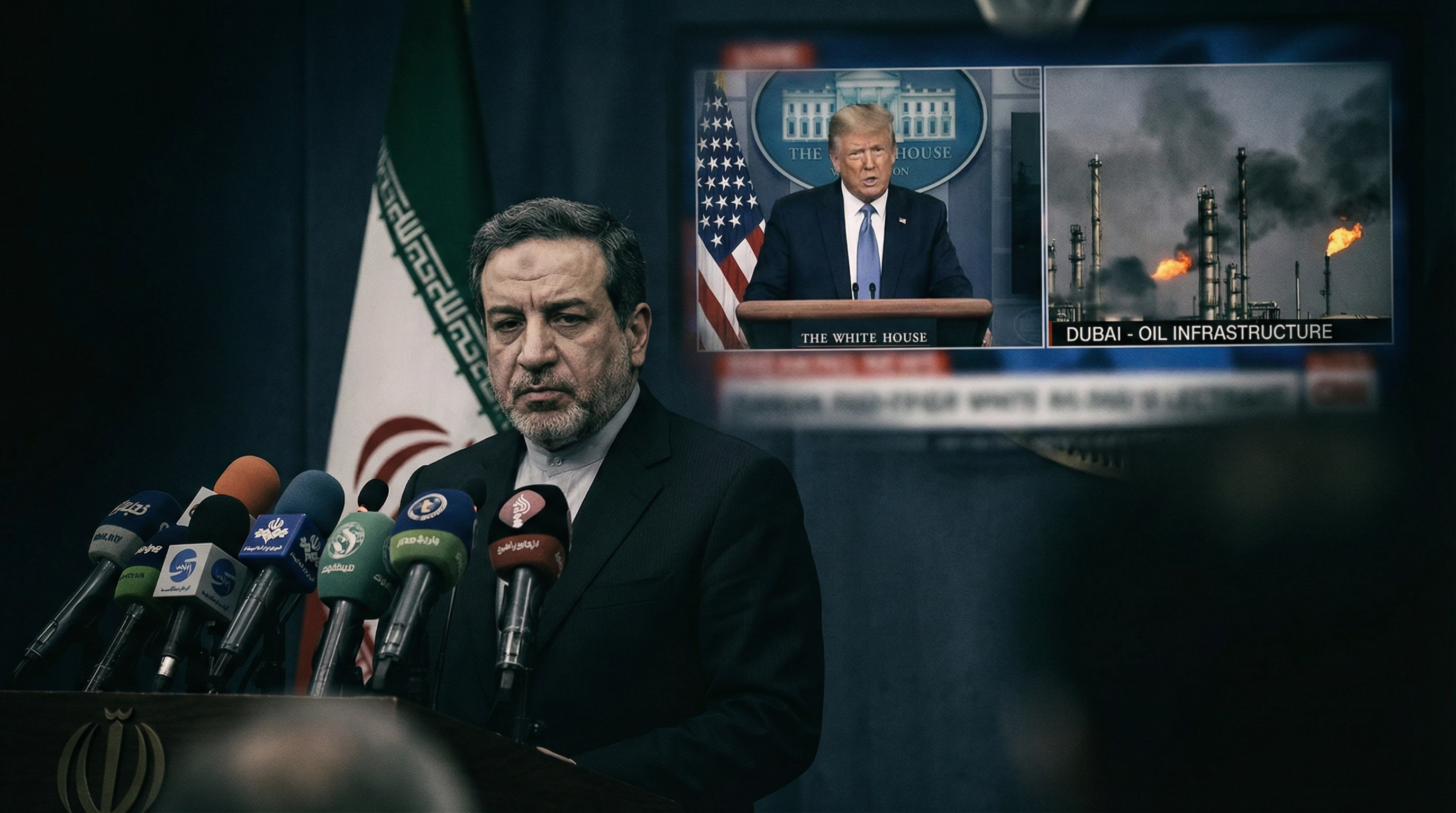
"Iran never sought a ceasefire," Foreign Minister Abbas Araghchi told CBS News on Sunday, directly contradicting President Donald Trump's weekend claims that Tehran had been "begging" for talks. "We are ready for a long war."
The statement, delivered with the measured calm of a man who has spent weeks watching his country absorb the most intensive aerial bombardment since the Iran-Iraq war of the 1980s, landed like a depth charge in diplomatic circles. Trump had spent Saturday on Truth Social insisting that Iran was desperate for a deal. Araghchi's rebuttal was categorical.
FIRE NEAR DUBAI — Hours after Araghchi's remarks, the United Arab Emirates confirmed that emergency services were responding to a fire near Dubai International Airport following what officials described as a drone attack. Footage circulating on social media showed thick black smoke rising from what appeared to be fuel storage infrastructure adjacent to the airport's southern perimeter.
Dubai International Airport — which handles more than 87 million passengers annually and serves as the primary transit hub for the entire Gulf region — was not directly struck, but the proximity of the blaze triggered emergency protocols and caused significant disruption to flight operations. Emirates airline confirmed several departures were delayed.
The UAE has maintained a studied neutrality since the conflict began on February 28, when US and Israeli forces launched a coordinated air campaign against Iranian nuclear and military infrastructure. Sunday's attack, if confirmed as Iranian in origin, would represent a significant escalation — and a direct challenge to the UAE's balancing act.
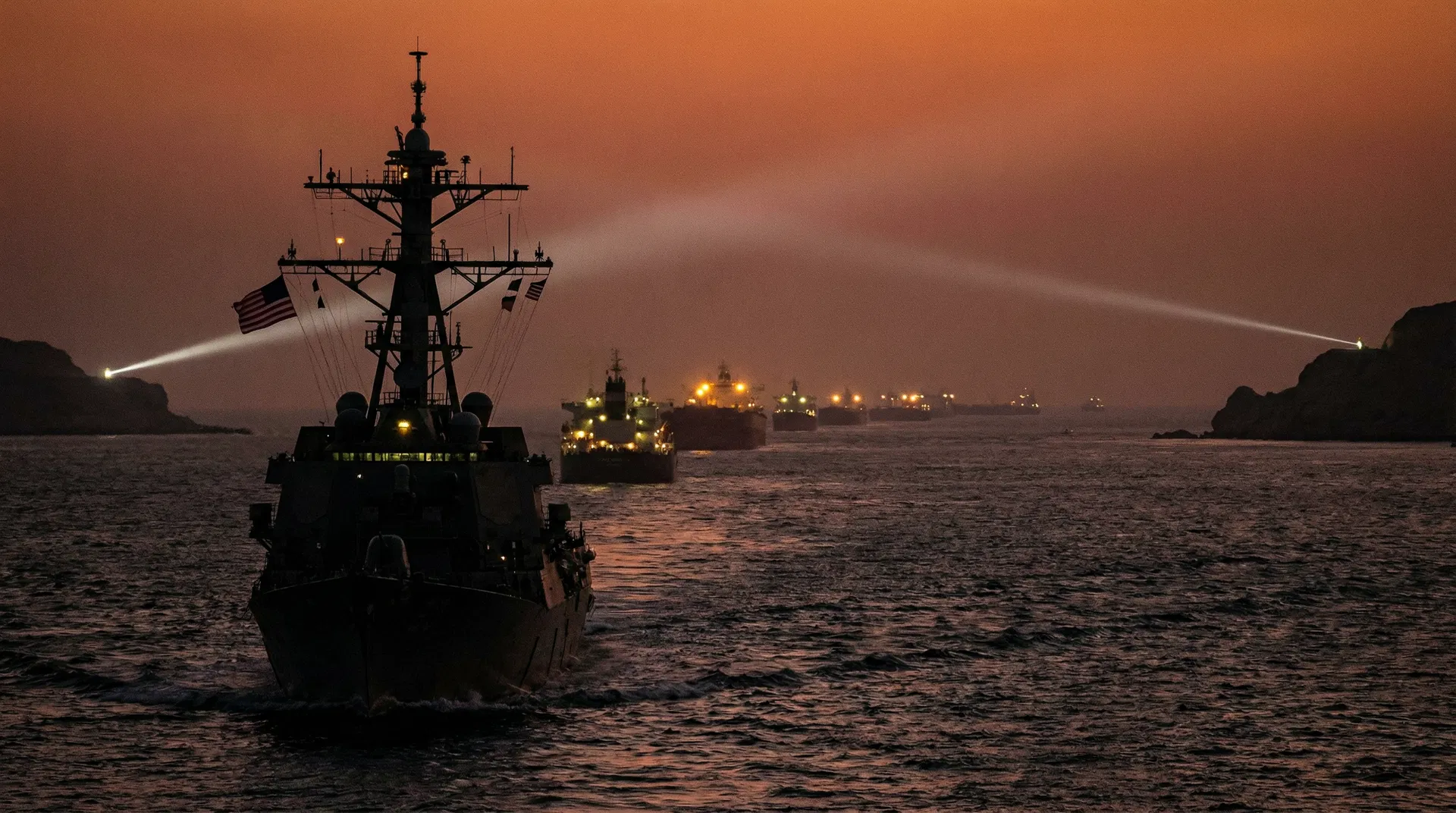
Iran's Revolutionary Guard Corps had not formally claimed responsibility as of Sunday evening, but Brigadier-General Ali Mohammad Naini, an IRGC spokesman, issued a pointed challenge to Trump's naval coalition proposal: "Didn't Trump say that Iran's navy has been destroyed? If so, let him send his ships into the Persian Gulf if he dares."
THE CEASEFIRE DISPUTE — The public contradiction between Trump and Araghchi over whether talks have occurred reflects a deeper pattern that has characterized this conflict from its opening hours: a fundamental disconnect between Washington's stated objectives and Tehran's strategic calculus.
Trump, speaking to reporters at Mar-a-Lago on Saturday, claimed that Iranian officials had "reached out through multiple channels" seeking a ceasefire. He declined to name the intermediaries but suggested that Oman had been involved. Araghchi's Sunday denial was unambiguous: "We have not sought a ceasefire. We have not asked for talks."
He confirmed that India had successfully negotiated passage for two of its gas tankers through the Strait of Hormuz on Saturday — a development that underscored the selective nature of Iran's maritime blockade. Indian External Affairs Minister S. Jaishankar confirmed the tanker passage to the Financial Times, noting that New Delhi had engaged in direct negotiations with Tehran.
THE HORMUZ STALEMATE — At least 1,000 oil tankers remain stranded in the Persian Gulf, unable to transit the Strait of Hormuz. Crude oil prices have stabilized near $100 a barrel — a level that is causing significant economic pain across the industrialized world but has not yet triggered the catastrophic supply shock that some analysts feared.
Trump's weekend proposal for an international naval coalition to escort ships through the strait received a notably muted response from the allies he named. China's embassy in Washington said Beijing would "strengthen communication with relevant parties" for de-escalation. France said it was "working on a possible international mission" but stressed that conditions were not yet right. Germany's foreign minister was blunter: "Will we soon be an active part of this conflict? No."
THE HUMAN COST — As the diplomatic maneuvering continued, the human toll of the conflict mounted. In Lebanon, where Hezbollah has resumed rocket fire into northern Israel in solidarity with Tehran, Israeli airstrikes have displaced more than 800,000 people and killed hundreds. UN Secretary-General António Guterres, who visited Beirut on Saturday, described the south of the country as risking being "turned into a wasteland."
In Iran itself, the US and Israeli strikes on Isfahan on Sunday killed 15 people, according to Iranian state media, as Tehran carried out retaliatory attacks on Israeli and Gulf targets.
US Secretary of Energy Chris Wright, appearing on NBC on Sunday, insisted that "all signs point to a relatively quick end to the conflict." The markets, the diplomats, and the people sheltering in Beirut's basements appeared less certain.
ANALYSIS — Araghchi's declaration that Iran is "ready for a long war" is not mere rhetoric. Iranian strategic doctrine, developed over four decades of confrontation with the United States and Israel, has always envisioned a conflict of attrition rather than a decisive conventional battle. The IRGC's asymmetric capabilities — its drone fleet, its network of regional proxies, its ability to disrupt global energy markets — are designed precisely for a prolonged campaign. The fire near Dubai's airport suggested that Iran still has the capacity to make that calculation costly for everyone.
Related Reports
US-Iran Ceasefire Talks Collapse: US Navy Blockades Iranian Ports as Fragile Truce Holds
Israel Escalates Lebanon Campaign as Ceasefire Excludes Hezbollah Ahead of Washington Talks