EU Imposes Sweeping Sanctions on Russia's Shadow Fleet

The EU is cracking down on Russia's 'shadow fleet' of oil tankers, moving from sanctions to direct seizures at sea. This has sparked a tense standoff with Moscow, raising concerns about maritime security and the effectiveness of Western sanctions, while the aging fleet also poses a significant environmental risk.
Tensions Escalate as Europe Confronts Russia's Shadow Fleet at Sea
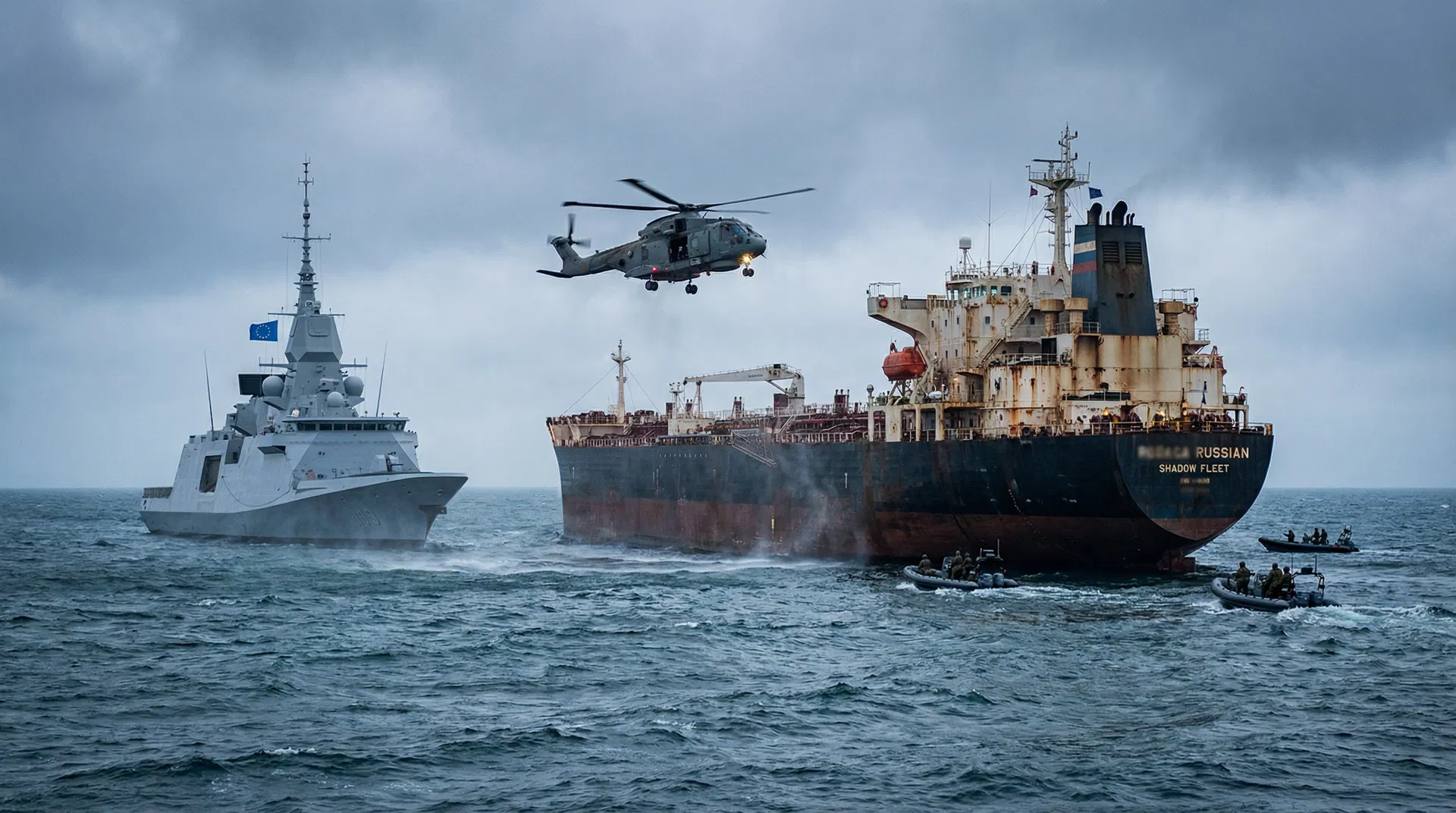
BRUSSELS – A high-stakes confrontation is unfolding across European waters as the European Union escalates its efforts to enforce sanctions against Russia's "shadow fleet," a sprawling network of aging tankers used to circumvent international oil price caps. In recent months, European naval forces have moved from monitoring to direct intervention, boarding and seizing vessels suspected of carrying Russian crude in violation of the G7-imposed price cap. These actions have been met with increasingly assertive countermeasures from Moscow, creating a volatile cat-and-mouse game that threatens to disrupt maritime security and challenges the resolve of the Western alliance.
The Crackdown Begins
The shift in European strategy became starkly evident in a series of bold enforcement actions. In early March 2026, the Swedish Coast Guard boarded and took control of the cargo vessel Caffa in the Baltic Sea, a move that signaled a new, more robust phase in sanctions enforcement. This followed similar interdictions by Belgian and French naval forces, who intercepted the shadow-fleet tanker Ethera in the North Sea, and a dramatic seizure of the crude-oil tanker Grinch by French commandos in January. These operations underscore a growing determination within the EU to close the loopholes that have allowed Russia to continue funding its war in Ukraine through illicit oil sales.
"We are moving beyond simple sanctions listings to active, at-sea enforcement," a senior EU official stated on condition of anonymity. "The credibility of our sanctions regime is at stake. We cannot allow Russia to flout international law with impunity."
Russia, however, has not been passive. In a clear show of defiance, the Russian military-linked product tanker General Skobelev was pointedly escorted by a Russian naval corvette through the English Channel in late January. Moscow has also encouraged the reflagging of its tankers to the Russian registry, a move designed to claim sovereign immunity and deter boardings. This has created a tense standoff, with European navies weighing the risks of intercepting vessels that are now, in effect, extensions of the Russian state.
Strategic Implications: A Test of Western Resolve
The escalating conflict over the shadow fleet represents a critical test of political and operational cohesion for both NATO and the EU. Russia's strategy is multifaceted: to undermine the effectiveness of the sanctions, to sow division among Western allies by raising the economic and political costs of enforcement, and to challenge the very foundations of the international maritime legal order. The inconsistent application of enforcement measures among EU member states has, at times, played into Russia's hands, creating seams in the sanctions wall that Moscow has been quick to exploit.
What This Means
The standoff is more than just a dispute over oil shipments; it is a direct challenge to the West's ability to impose meaningful economic consequences on Russia. The success or failure of these enforcement actions will have far-reaching implications. A failure to effectively neutralize the shadow fleet would not only embolden Russia but could also set a dangerous precedent, encouraging other state and non-state actors to disregard international sanctions in the future. The credibility of the entire G7 price cap mechanism hangs in the balance.
The Environmental Ticking Time Bomb
Beyond the geopolitical maneuvering, the shadow fleet poses a grave and immediate environmental threat. The fleet is a motley collection of aging, poorly maintained, and inadequately insured tankers. According to a report by the Atlantic Council, the average age of a Very Large Crude Carrier (VLCC) in the shadow fleet is 18.1 years, nearly double the industry average for the mainstream, regulated fleet. These decrepit vessels are accidents waiting to happen.
"The shadow fleet is a disaster waiting to happen," said a maritime insurance expert. "These are rusting hulks, often sailing under flags of convenience with phantom insurance policies. A major spill is not a question of if, but when."
The collision of the shadow fleet tanker Andromeda Star in the Baltic Sea in March 2024 was a chilling wake-up call. While a catastrophic spill was narrowly averted, the incident highlighted the immense risks. These tankers often navigate through ecologically sensitive and high-traffic areas, such as the Danish Straits and the English Channel. A significant oil spill in these waters would have devastating and irreversible consequences for marine ecosystems, coastal communities, and vital economic sectors like fishing and tourism.
The Path Forward: Expert Recommendations
Analysts from the Brookings Institution have urged European policymakers to adopt a more aggressive and unified strategy. They argue that the current approach is not enough to deter Russia and that a fundamental shift in liability is needed. Their key recommendations include:
Shifting Liability: Place the legal and financial responsibility for any incident squarely on the flag states of the vessels. This would compel countries that offer "flags of convenience" to ensure that any ship flying their flag has legitimate and sufficient insurance.
Diplomatic Pressure: Use concerted diplomatic leverage to discourage countries from providing flags to the shadow fleet.
Secondary Sanctions: Consider the use of secondary sanctions against entities, individuals, and countries that knowingly facilitate Russia's sanctions evasion.
"The goal must be to make the operation of the shadow fleet so legally and financially risky that it becomes untenable," the Brookings report concluded.
A Forward-Looking Analysis
The confrontation over Russia's shadow fleet is poised to intensify. As the EU and its allies tighten the net, Russia is likely to resort to more creative and potentially aggressive tactics. This could include increased use of naval escorts, electronic warfare to spoof vessel locations, and legal challenges aimed at tying up enforcement actions in courts. There is also a tangible risk of asymmetric responses, such as cyberattacks on port infrastructure or sabotage of maritime assets.
The coming months will be crucial. European nations will need to demonstrate unwavering political will and enhance their operational coordination. This includes sharing intelligence more effectively, standardizing enforcement protocols, and presenting a united front against Russian intimidation. The long-term health of Europe's marine environment and the stability of the international sanctions regime depend on their success. The world is watching to see if the West can finally pull the plug on Russia's illicit oil trade.
Frequently Asked Questions
What is Russia's 'shadow fleet'?
Why is the shadow fleet a problem?
What is the EU doing about it?
Related Reports
Ukraine and Russia Accuse Each Other of Breaching Easter Ceasefire as War Enters Fifth Year

Orban Era Ends: Hungarian Prime Minister Defeated in Historic Election by Peter Magyar