Africa Emerges as New Front in Iran's Geopolitical Strategy

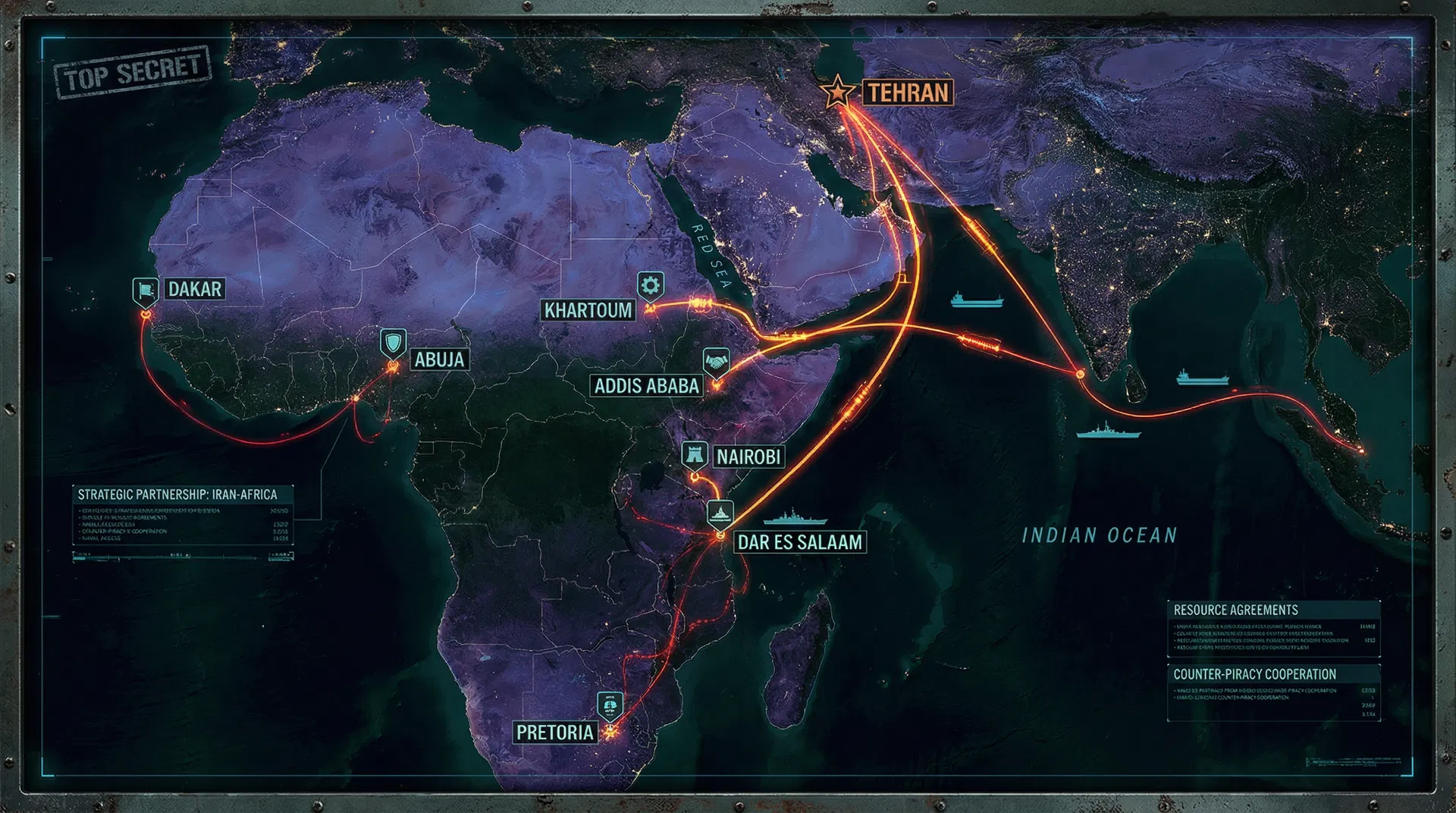
The 2026 Iran-US/Israel conflict has pushed Tehran to deepen its engagement in Africa, transforming the continent into a strategic rear for its geopolitical ambitions. Through a mix of drone diplomacy, resource extraction, and shadow networks, Iran is building a resilient and far-reaching presence that challenges Western influence and reshapes regional security dynamics.
The eruption of the 2026 military conflict between Iran and the US-Israel alliance has pivoted Africa from a peripheral battleground to an essential strategic landscape. For the past decade, Tehran has been quietly shifting from revolutionary ideology to pragmatic, transactional relationships across the continent. This evolution has crystallized under the intense pressure of sustained airstrikes on its nuclear and military facilities, forcing a recalibration of its foreign policy.
With Western influence receding in some parts of Africa and Gulf nations distracted, Tehran has identified and exploited critical power vacuums. This has yielded a threefold advantage: access to unregulated mineral resources, the expansion of maritime logistics, and a bolstered diplomatic front within the BRICS framework.
THE SAHEL AND THE DRONES-FOR-URANIUM TRADE
The Sahel and West Africa have become the primary theater for this new strategy. Following a series of coups since 2023, the Alliance of Sahel States has increasingly rejected French and Western security cooperation, creating an opening for Iran. Tehran has capitalized on this by striking drones-for-uranium deals with the new juntas in Niger and Bamako. In exchange for Mohajer-6 and Shahed-series drones, surveillance systems, and technical advisors, Iran gains access to yellowcake uranium and artisanal gold, crucial for its nuclear program and for circumventing international sanctions.
THE HORN OF AFRICA AND THE RED SEA FOOTHOLD
Iran's procurement and influence strategy extends into the Horn of Africa, where Sudan's civil war has provided a fertile ground for expanding its operational reach. Since late 2025, Iranian drones and military equipment have been funneled through Eritrean ports to support the Sudanese Armed Forces (SAF). In return, Tehran has sought a permanent naval base on the Red Sea, a strategic prize that would connect its own coastline to its Houthi allies in Yemen and grant it significant leverage over maritime trade routes.
While the most immediate threats to shipping in the Bab el-Mandeb strait have come from Houthi attacks, Iran's growing presence in Sudan represents a long-term strategic hedge. By supporting the SAF, Tehran is cultivating a network of partnerships that enhances its influence in the Red Sea and provides a low-profile means of projecting power.
DIPLOMATIC AND ECONOMIC SHIELDS
In North Africa, Iran has cultivated diplomatic support to counter its international isolation. Algeria, in particular, has used its relationship with Tehran to challenge Morocco's normalization of ties with Israel and to position itself as a leader of Arab-African independence. Further south, South Africa has become a vital diplomatic and financial shield for Iran. As a key architect of the BRICS bloc, South Africa has facilitated Iran's integration into alternative economic and trade systems that are less vulnerable to Western sanctions.
THE HUMAN NETWORK AND SHADOW ECONOMY
Underpinning Iran's state-level engagement is a vast human network cultivated through institutions like Al-Mustafa International University. With branches across Africa, the university has trained thousands of clerics who return to their home countries to establish dual-use mosques, charities, and cultural centers. These institutions serve as hubs for intelligence gathering, recruitment, and logistical support for the IRGC Quds Force.
This network is funded by a shadow economy that relies on the illicit trade of conflict gold from Sudan and other resources from across the Sahel. This financial architecture allows Iran to sustain its proxy activities and military acquisitions even when its formal banking sector is crippled by sanctions.
A NEW GEOPOLITICAL REALITY
Iran's "Continental Rear" strategy is transforming sub-Saharan Africa into a theater for asymmetric warfare, where Tehran can project power and impose costs on its adversaries with minimal direct risk. African nations that engage with Iran, often out of a desperate need for security assistance or economic relief, find themselves entangled in a complex web of proxy conflicts and illicit economies.
The United States and its allies face a difficult challenge in responding to Iran's growing influence in Africa. Direct confrontation risks escalating tensions with sovereign African states, while inaction allows Tehran to further entrench its economic, logistical, and strategic networks. As the continent becomes a new front in a global power struggle, the fallout will be felt across its markets, societies, and systems of governance for years to come.
Frequently Asked Questions
How has the 2026 Iran-US/Israel conflict changed Iran's strategy in Africa?
What are the main components of Iran's strategy in Africa?
What are the risks for African countries that align with Iran?
Related Reports
Sudan War Enters Third Year: Millions Surviving on One Meal a Day Amidst Famine Fears

Iran War's Economic Shockwave: Asia Faces Energy Crisis as Oil Tops $106
