Why China Wants Taiwan: History, Politics, and Military Strategy

China views Taiwan as a renegade province that must be reunified with the mainland, driven by historical grievances dating to the 1949 Chinese Civil War, ideological opposition to Taiwan's democracy, and strategic imperatives including control of critical semiconductor manufacturing (TSMC). Beijing's military modernization and increasingly aggressive posture in the strait reflect a determination to achieve this goal, while the United States remains committed to Taiwan's defense, creating one of the world's most dangerous geopolitical flashpoints.
The Taiwan Strait, barely 100 miles wide at its narrowest point, separates two competing visions of China's future. On one side lies the People's Republic of China, a communist authoritarian state with a population of 1.4 billion. On the other sits Taiwan, a thriving democracy of 23 million people with its own government, military, and economy. Yet Beijing insists that Taiwan is not a separate country but rather a renegade province that must be reunified with the mainland. Understanding why China wants Taiwan — and why it is willing to risk a catastrophic war to achieve this goal — requires examining the historical, political, and strategic forces that have shaped this conflict.
The Historical Roots: The Chinese Civil War and the "Two Chinas" Problem
The origins of the Taiwan question lie in the Chinese Civil War (1927–1949), one of the deadliest conflicts of the 20th century. For more than two decades, the Kuomintang (KMT), a Chinese nationalist party, and the Chinese Communist Party (CCP) fought for control of mainland China. The CCP, led by Mao Zedong, ultimately prevailed. On October 1, 1949, Mao proclaimed the establishment of the People's Republic of China in Beijing, marking a communist victory that would reshape the entire Asian continent.
But the war did not end with a complete communist victory. The defeated KMT government, led by Chiang Kai-shek, retreated to the island of Taiwan, along with approximately 1.5 million soldiers, government officials, and civilians. From Taipei, which they declared the provisional capital, the KMT government continued to claim sovereignty over all of China. This retreat created what became known as the "two Chinas" problem — a situation in which two governments claimed to be the legitimate rulers of a single nation. For decades, both the PRC and the Republic of China (ROC, Taiwan's official name) maintained this fiction, each claiming to represent the whole of China.
This historical division is central to understanding Beijing's determination to reunify Taiwan. For the Chinese Communist Party, the failure to complete the conquest of China in 1949 represents an unfinished chapter of the revolution. The existence of Taiwan as a separate political entity is, from Beijing's perspective, an affront to Chinese sovereignty and a reminder of a historical humiliation. Reunifying Taiwan would represent the completion of the communist revolution and the restoration of China's territorial integrity.
The "One China" Policy and International Recognition
The People's Republic of China has made the "One China" principle the cornerstone of its foreign policy. This principle asserts that there is only one sovereign state called China, and that the PRC is the sole legitimate government of that state. From Beijing's perspective, Taiwan is not a separate country but rather a province of China that is temporarily under the control of a separatist government. This position has been codified in numerous official statements and is non-negotiable in Beijing's eyes.
Most countries in the world have accepted the PRC's position and established formal diplomatic relations with Beijing rather than Taipei. The United States, however, has adopted a more nuanced approach. While the US formally recognizes the PRC as the government of China, it has maintained robust unofficial relations with Taiwan and is committed to providing Taiwan with defensive military capabilities under the Taiwan Relations Act of 1979. This delicate balancing act — known as "strategic ambiguity" — has been a cornerstone of US policy for decades, but it has also created ambiguity about whether the US would actually defend Taiwan in the event of a Chinese attack.
Taiwan's Democratic Transformation and the Widening Divide
For decades after 1949, Taiwan was an authoritarian one-party state under KMT rule. However, beginning in the late 1980s, Taiwan underwent a remarkable democratic transformation. Martial law, which had been in place since 1949, was lifted in 1987. Opposition parties were legalized, and in 1996, Taiwan held its first direct presidential election. Today, Taiwan is a vibrant, multi-party democracy with a free press, an independent judiciary, and a strong civil society.
This democratic transformation has profoundly altered the political landscape of the Taiwan Strait. The Taiwanese people, particularly younger generations who have grown up in a democracy, increasingly identify as Taiwanese rather than Chinese. Opinion polls consistently show that a majority of Taiwanese oppose unification with the mainland, and support for independence has grown significantly in recent years. For many Taiwanese, democracy and freedom are not abstract values but lived experiences that distinguish their society from the authoritarian PRC.
This democratic divide has become a major obstacle to any peaceful reunification scenario. Beijing's insistence on the "One China" principle and its rejection of Taiwan's democratic system as illegitimate stand in stark contrast to the Taiwanese people's deep attachment to their democratic institutions. Any attempt by Beijing to forcibly reunify Taiwan would be seen by the international community as an attack on democracy itself, further isolating China and potentially triggering a major international crisis.
The Military Dimension: A Massive Imbalance of Power
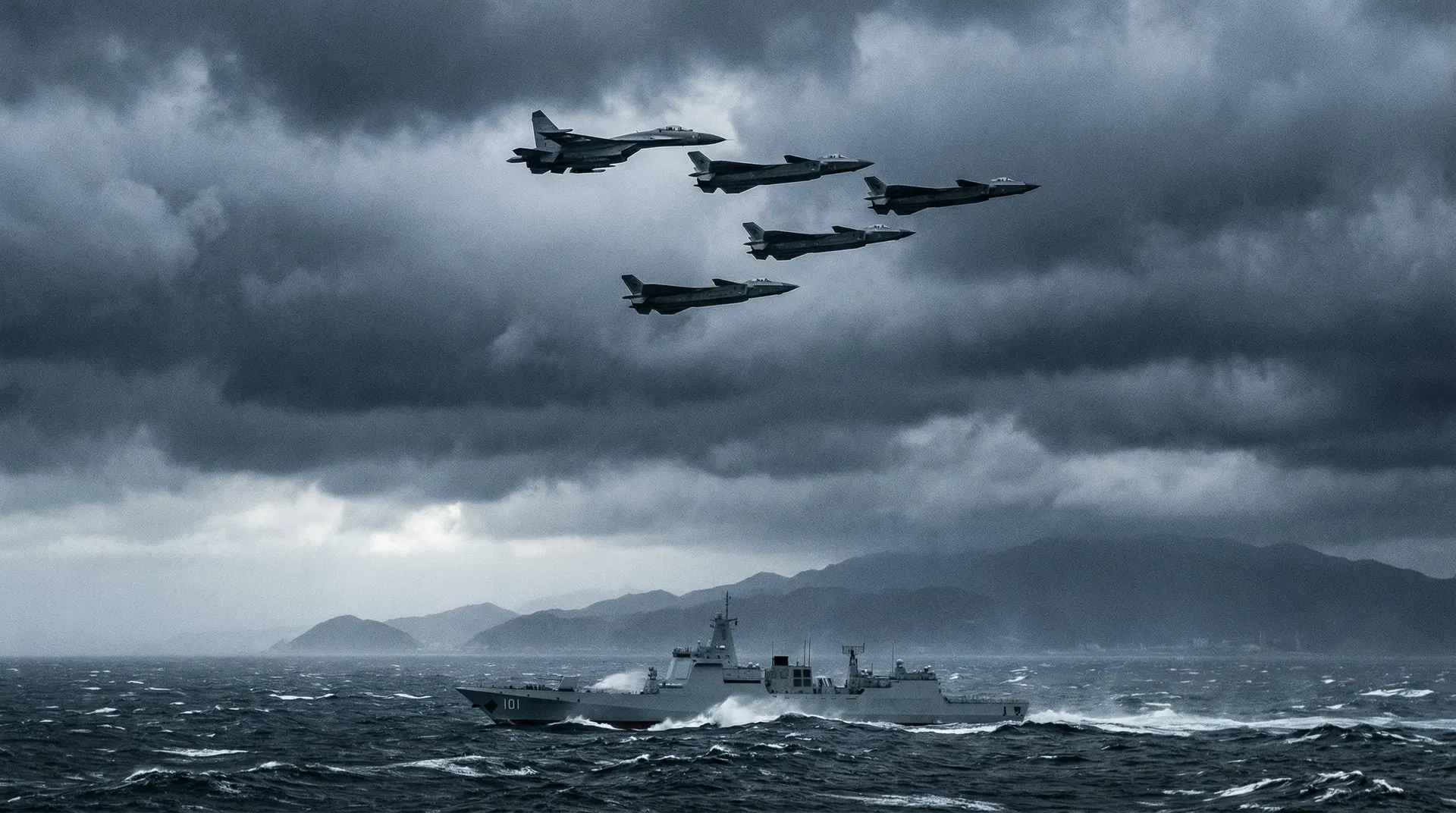
China's military modernization over the past two decades has been extraordinary in scope and ambition. The People's Liberation Army (PLA) has transformed itself from a primarily land-based force into a modern, technologically advanced military capable of projecting power across the Indo-Pacific region. The PLA Navy has grown from a coastal defense force into a blue-water navy with aircraft carriers, advanced destroyers, and submarines. The PLA Air Force has been equipped with modern fighter jets and advanced air defense systems. The PLA Rocket Force controls a vast arsenal of ballistic and cruise missiles, many of which are specifically designed to strike Taiwan.
The military balance in the Taiwan Strait has shifted dramatically in China's favor. According to the Global Firepower Index, China has approximately 2 million active military personnel compared to Taiwan's 230,000. China has over 3,500 military aircraft compared to Taiwan's 720. China has over 5,800 tanks compared to Taiwan's 1,090. In terms of naval power, China has over 840 naval vessels compared to Taiwan's 91.
However, Taiwan's military is not without strengths. Taiwan's forces are well-trained, well-motivated, and equipped with modern defensive weapons provided by the United States. Taiwan has also invested heavily in asymmetric warfare capabilities — low-cost, high-impact weapons designed to inflict maximum damage on an invading force. These include anti-ship missiles, sea mines, and cyber warfare capabilities. The concept underlying Taiwan's defense strategy is that while Taiwan cannot match China's military in terms of sheer numbers, it can make an invasion so costly that Beijing would think twice before attempting it.
The Semiconductor Imperative: TSMC and Global Technology
Taiwan's strategic importance is magnified by its dominance of the global semiconductor industry. Taiwan Semiconductor Manufacturing Company (TSMC) is the world's largest and most advanced contract manufacturer of microchips. These chips are the essential building blocks of the modern digital economy, powering everything from smartphones and laptops to advanced military hardware, artificial intelligence systems, and autonomous vehicles.
TSMC's dominance is staggering. The company manufactures over 50 percent of the world's semiconductors and over 90 percent of the world's most advanced chips. The company's advanced fabrication plants, or "fabs," are located exclusively on Taiwan. A Chinese takeover of Taiwan would give Beijing control over this critical technology, with profound implications for the global economy and for the military balance of power.
The world's reliance on TSMC for advanced semiconductors is a major vulnerability. A disruption in TSMC's production, whether due to a natural disaster, a cyberattack, or a military conflict, would have a devastating impact on a wide range of industries. This semiconductor dependency has made Taiwan a critical node in the global economy, and it has also made Taiwan a target for Beijing. Control of TSMC would give China not only a strategic advantage in military technology but also enormous economic leverage over the United States and its allies.
US Arms Sales and the Security Dilemma
The United States is the primary supplier of defensive arms to Taiwan. Under the Taiwan Relations Act of 1979, the US is obligated to provide Taiwan with the articles and services necessary to enable it to maintain a sufficient self-defense capability. In recent years, the US has approved a series of major arms sales to Taiwan, including F-16 fighter jets, Abrams tanks, Harpoon anti-ship missiles, and advanced air defense systems.
These arms sales are intended to bolster Taiwan's defenses and deter Chinese aggression. However, they also create a security dilemma. Each time the US approves a major arms sale to Taiwan, China protests vehemently and threatens retaliation. Beijing views these sales as a violation of its sovereignty and as evidence of US interference in China's internal affairs. The arms sales have become a constant source of friction in US-China relations, and they have contributed to the deterioration of the relationship between Washington and Beijing.
Recent Military Exercises and the Escalating Threat
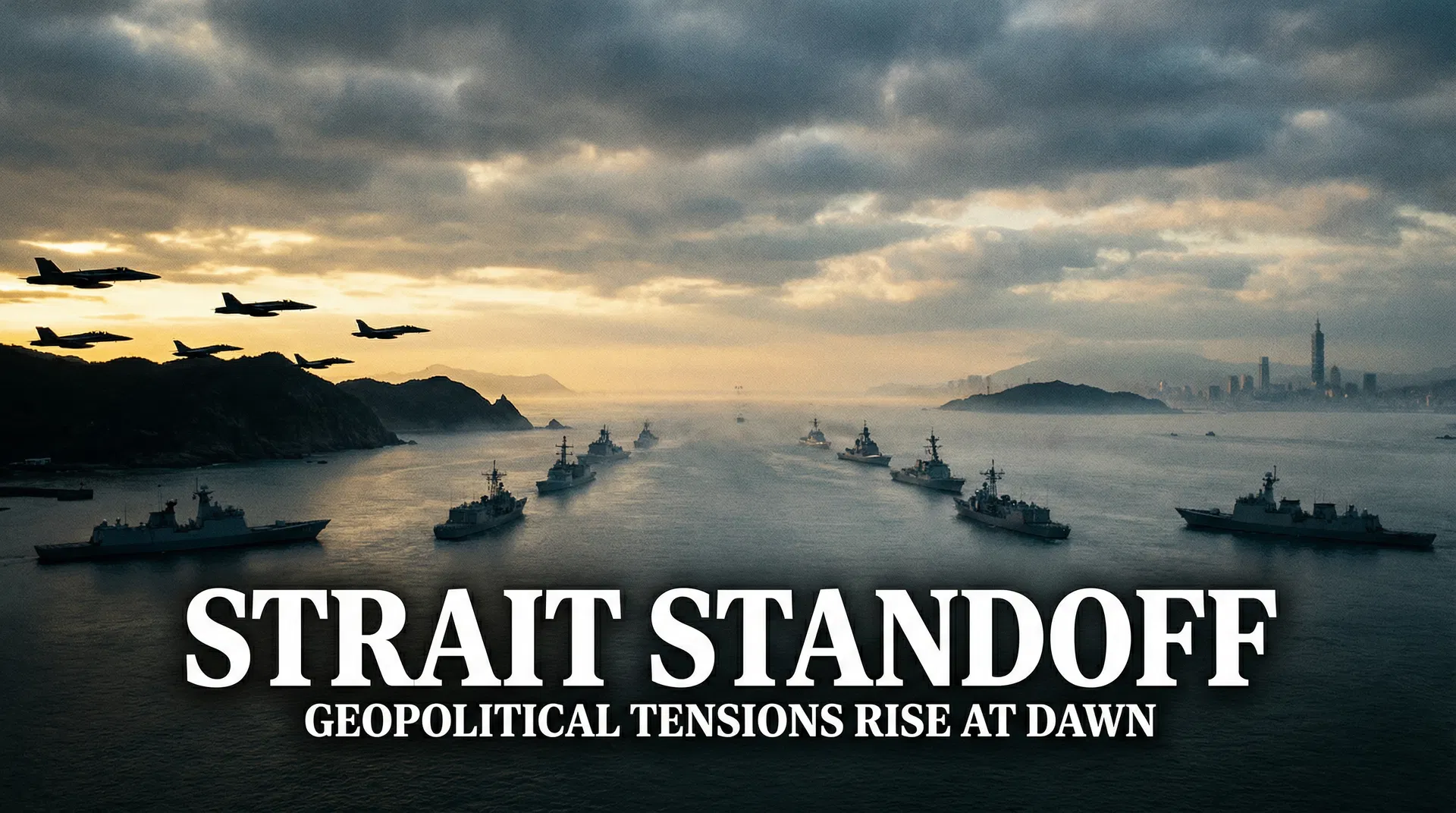
In recent years, China has conducted a series of increasingly provocative military exercises in the vicinity of Taiwan. In December 2025, the PLA conducted its largest-ever military exercise encircling Taiwan, simulating a full-scale blockade of the island. These exercises have included live-fire drills, amphibious assault simulations, and flights by military aircraft into Taiwan's air defense identification zone (ADIZ).
Related Reports

Iran War's Economic Shockwave: Asia Faces Energy Crisis as Oil Tops $106

Myanmar's Sham Parliament Convenes: Military Tightens Grip Five Years After Coup