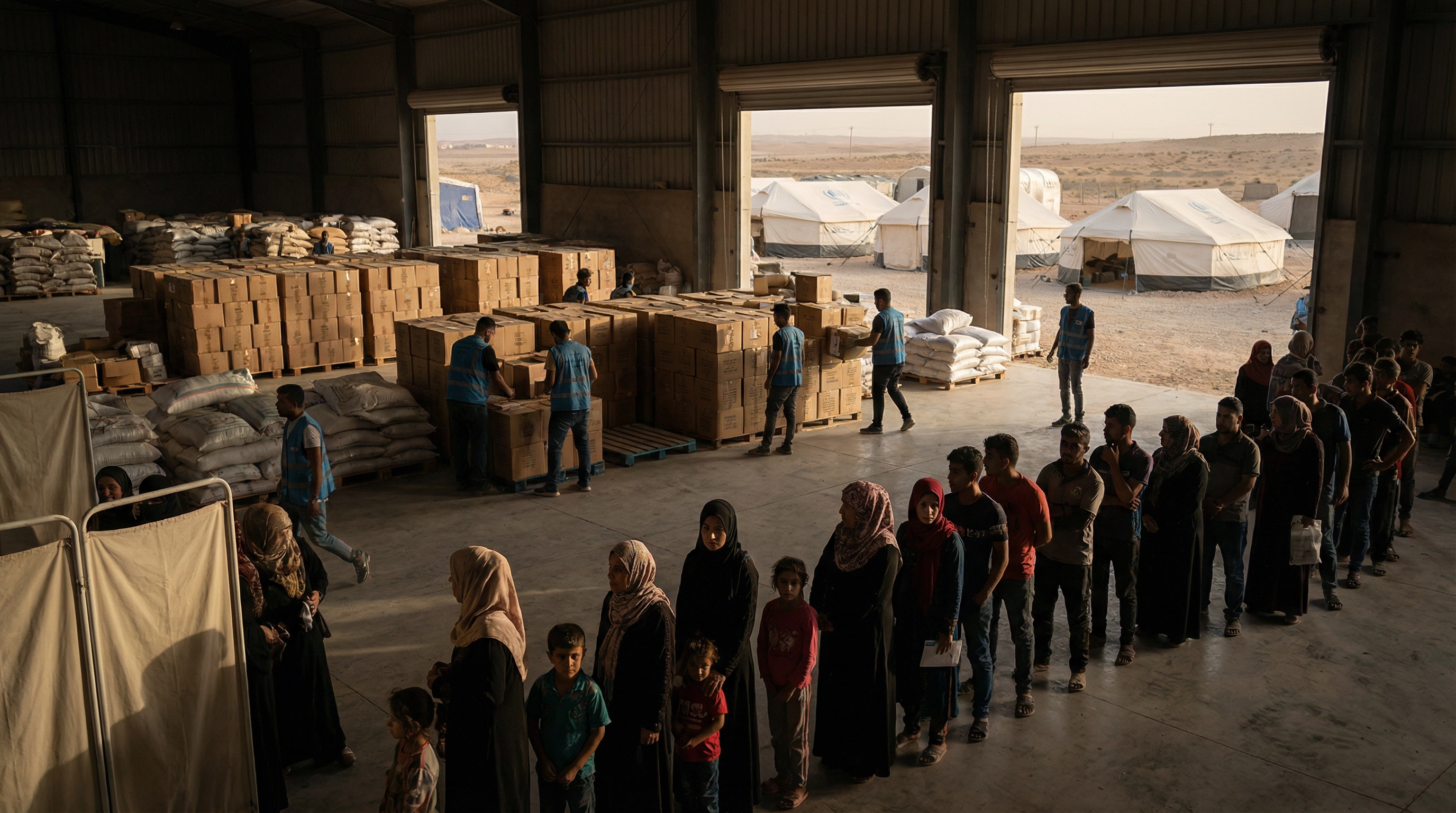
WFP Seeks $200 Million as Middle East Hunger Crisis Deepens Amid Conflicts

WFP launches $200M emergency appeal as hunger crisis deepens across Middle East. 23 million people face acute food insecurity amid conflicts in Gaza, Lebanon, Syria, and Yemen.
ROME, ITALY — The United Nations World Food Programme (WFP) announced on March 13 a $200 million emergency appeal to address the escalating humanitarian crisis in the Middle East. The appeal comes as conflicts across the region have displaced millions and disrupted food supply chains, leaving vulnerable populations facing acute food insecurity.
"We are facing an unprecedented humanitarian emergency," said WFP Executive Director Cindy McCain in a statement. "Millions of people across the Middle East are facing hunger due to ongoing conflicts, economic collapse, and climate-related challenges. Without immediate action, we will see a catastrophic deterioration in the situation."
The WFP's appeal targets assistance for populations in Gaza, Lebanon, Syria, Yemen, and Iraq. According to the organization, approximately 23 million people across these countries are facing acute food insecurity, with 5.5 million at risk of famine-like conditions.
In Gaza, the humanitarian situation has deteriorated significantly due to the ongoing Israeli-Palestinian conflict. The WFP estimates that 1.7 million people—nearly 80% of Gaza's population—are facing acute food insecurity. The organization has been operating a limited food assistance program, but funding constraints have severely restricted its capacity.
Lebanon, already struggling with a severe economic crisis, has been further destabilized by recent Israeli strikes and Hezbollah-related violence. The WFP reports that 1.5 million Lebanese are now food insecure, including hundreds of thousands of Syrian refugees who have fled to Lebanon.
Syria's humanitarian crisis remains one of the world's worst, with the WFP estimating that 12.4 million Syrians require humanitarian assistance. The organization is providing food assistance to millions of Syrians, but funding shortfalls have forced reductions in ration sizes.
Yemen continues to face one of the world's worst humanitarian crises, with the WFP estimating that 21.6 million Yemenis require humanitarian assistance. The ongoing conflict between Houthi rebels and the Saudi-led coalition has devastated the country's food production and distribution systems.
The WFP's appeal seeks to fund food assistance, cash transfers, and nutritional support programs. The organization also plans to support local food production and market stabilization efforts to address the root causes of food insecurity.
International donors have been called upon to contribute to the appeal. The United States, European Union, and other major donors have historically supported WFP operations, though funding has been inconsistent and often insufficient to meet the scale of need.
The humanitarian crisis in the Middle East reflects the interconnected nature of modern conflicts, where military operations, economic instability, and climate challenges combine to create complex emergencies. The WFP's appeal underscores the urgent need for both immediate humanitarian assistance and long-term conflict resolution efforts.
Related Reports

US-Iran Ceasefire Talks Collapse: US Navy Blockades Iranian Ports as Fragile Truce Holds

Israel Escalates Lebanon Campaign as Ceasefire Excludes Hezbollah Ahead of Washington Talks