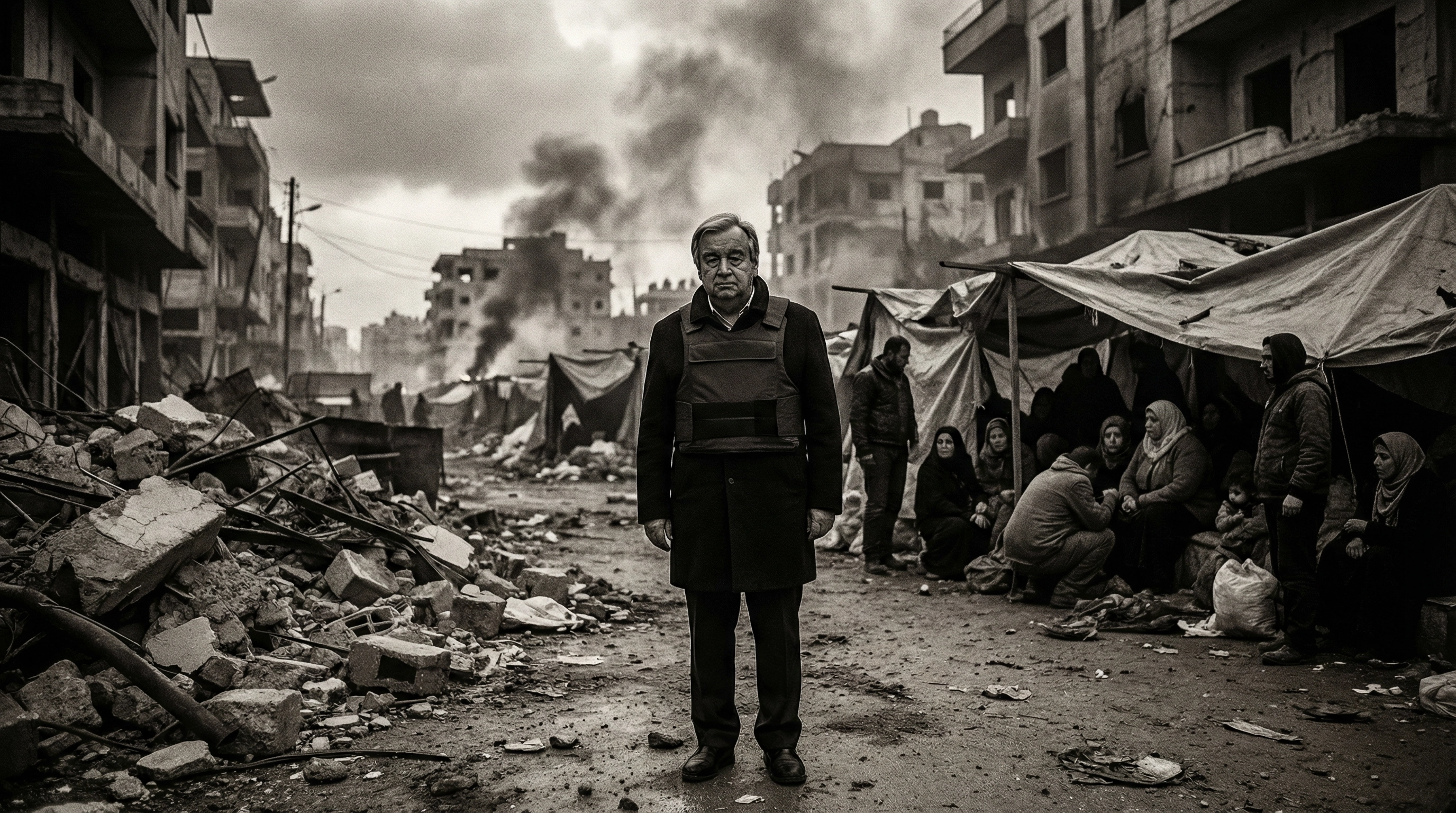
'The War Must Stop': Guterres Delivers Stark Warning from Rubble-Strewn Beirut

UN Secretary-General António Guterres traveled to Beirut on Saturday to deliver an unambiguous message: the war must stop. Standing amid the ruins of a city where more than 800,000 people have been displaced, Guterres warned that southern Lebanon 'risks being turned into a wasteland' and called on the international community to step up engagement.
BEIRUT — António Guterres did not come to Beirut to negotiate. He came to bear witness — and to deliver a message that no amount of diplomatic language could soften.
"The war must stop," the United Nations Secretary-General said Saturday, standing before cameras in a city where the sound of Israeli airstrikes has become as familiar as traffic noise. "The Lebanese people did not choose this war. They were dragged into it."
The visit — the first by a sitting UN Secretary-General to Lebanon since the current conflict began on February 28 — was both a solidarity mission and a stark public indictment of the international community's failure to halt the fighting.
Guterres toured displacement camps in the Bekaa Valley, where more than 300,000 people have sought refuge from the fighting in the south. He met with Lebanese Prime Minister Nawaf Salam, who has been attempting to navigate a path between Hezbollah's military operations and the Israeli response. He visited a hospital overwhelmed with casualties.
"I have seen the faces of children who have lost everything," Guterres said at a press conference in central Beirut. "I have spoken to families who do not know if their homes still exist. I have walked through neighborhoods that have been reduced to rubble. This must stop."
THE DISPLACEMENT CRISIS — More than 800,000 Lebanese have been displaced since the conflict began — a figure that represents roughly 15 percent of the country's population. The UN High Commissioner for Refugees has described the displacement as one of the fastest-moving refugee crises in the region since the 2006 war.
The situation is complicated by Lebanon's pre-existing economic collapse. The country has been in financial crisis since 2019, with the Lebanese pound having lost more than 90 percent of its value. The infrastructure required to support hundreds of thousands of displaced people — schools, hospitals, water systems — was already operating at reduced capacity before the current conflict began.
UNIFIL UNDER FIRE — Guterres also addressed the situation of UNIFIL peacekeepers, who came under fire three times over the weekend in incidents near Yatar, Dayr Kifa, and Qallawiyah. The mission said hostile fire most likely came from "non-State armed groups."
"Attacks against peacekeepers and positions are completely unacceptable and they must stop," Guterres said. He visited a Ghanaian peacekeeper in hospital who had been injured in one of the recent incidents — a moment that underscored the personal cost of the mission's presence in southern Lebanon.
UNIFIL, which has been deployed in southern Lebanon since 1978, has faced repeated challenges to its mandate. The force's ability to monitor the Blue Line separating Lebanon from Israel has been severely constrained by the intensity of the fighting.
THE INTERNATIONAL RESPONSE — Guterres' visit came as international pressure for a ceasefire mounted but failed to translate into concrete diplomatic action. The United States, which has provided military support to Israel throughout the conflict, has called for restraint while stopping short of demanding an immediate halt to operations.
France and the European Union have been more vocal in their calls for a ceasefire, but have struggled to exert meaningful pressure on the parties. Arab states, many of which have their own complicated relationships with Hezbollah and Iran, have issued statements of concern without committing to active mediation.
The UN Security Council has been paralyzed by the familiar dynamic of US vetoes blocking resolutions critical of Israeli military operations. Guterres has used his platform as Secretary-General to speak directly to the public — a strategy that has raised his profile but has not yet produced the diplomatic breakthrough that Lebanon's civilians desperately need.
"The international community has a responsibility to act," Guterres said before departing Beirut. "Every day of delay is another day of suffering for the Lebanese people. The time for action is now." Whether that call will be heeded remained, as of Saturday evening, deeply uncertain.
Related Reports

US-Iran Ceasefire Talks Collapse: US Navy Blockades Iranian Ports as Fragile Truce Holds
Israel Escalates Lebanon Campaign as Ceasefire Excludes Hezbollah Ahead of Washington Talks