Trump Praises China, Confirms Xi Jinping Meeting as Iran War Reshapes Global Alliances
President Trump praised US-China relations and confirmed a meeting with Xi Jinping in 5-6 weeks, signaling a diplomatic pivot as the Iran war fractures NATO. China has maintained calculated silence on the conflict while benefiting from the strategic chaos. Analysts in Taipei fear Taiwan could become a bargaining chip as Washington seeks to reduce friction with Beijing amid the Middle East crisis.
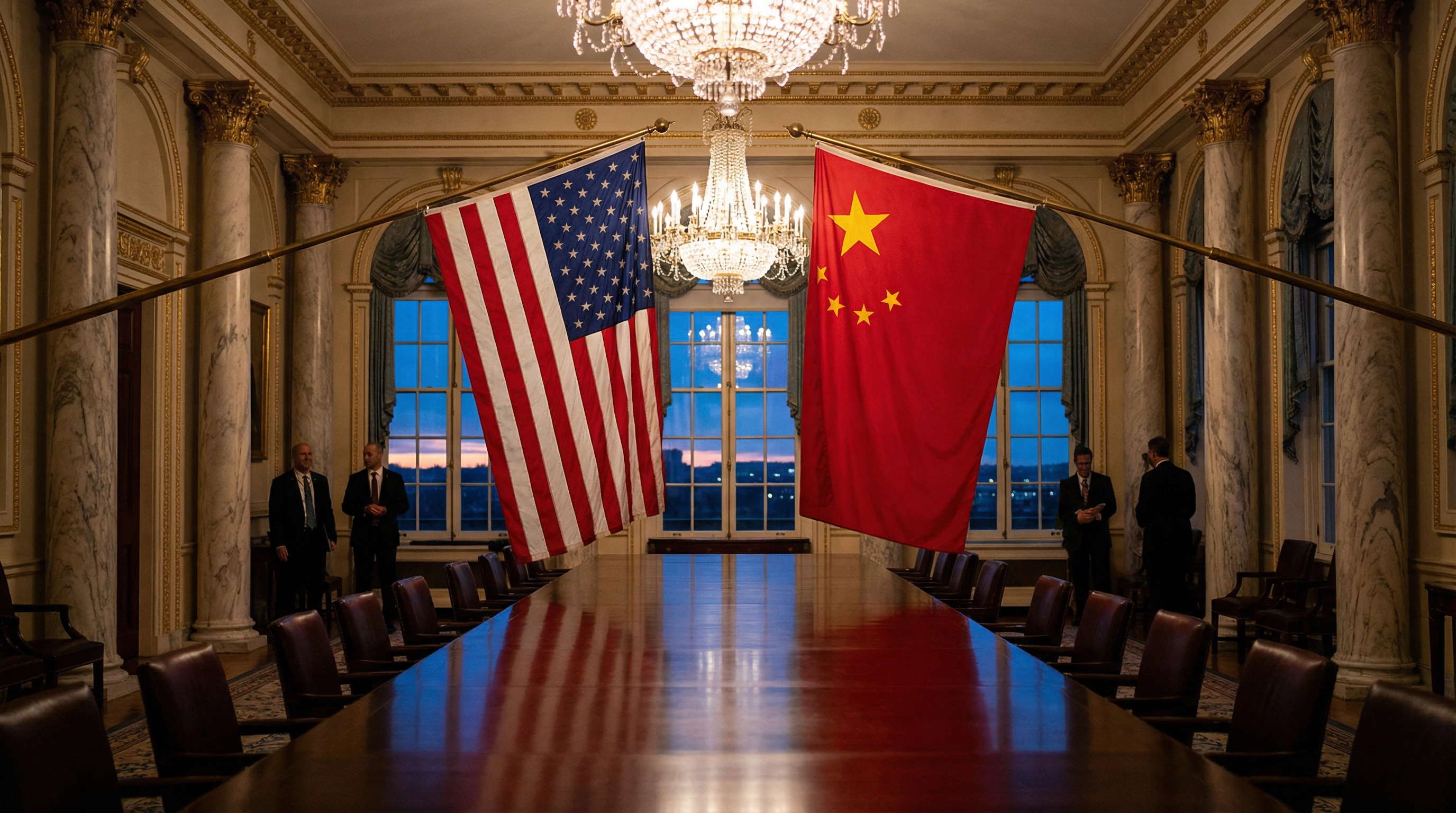
WASHINGTON — In a striking diplomatic pivot amid the chaos of the Iran war, President Donald Trump praised the United States' relationship with China as "very good for America" and confirmed that a meeting with Chinese President Xi Jinping has been rescheduled for approximately five to six weeks from now. The remarks, delivered during a wide-ranging Oval Office press conference on Tuesday, signal a notable softening of tone toward Beijing at a moment when Washington's traditional Western alliances are under unprecedented strain.
The announcement comes against a backdrop of extraordinary geopolitical turbulence. The US-led war on Iran has fractured the NATO alliance, with European capitals openly refusing to support American military operations in the Strait of Hormuz. Russia is reaping economic windfalls from surging oil prices. And China — which has carefully avoided taking sides in the Iran conflict — appears to be positioning itself as a potential diplomatic broker and economic beneficiary of the shifting global order.
"We have a good relationship with China," Trump told reporters. "The economic ties are very good for America." The president's warm tone toward Beijing stands in sharp contrast to the confrontational rhetoric that has characterized US-China relations for much of the past decade, and it raises important questions about how the Iran war is reshaping Washington's strategic priorities.
BEIJING'S CALCULATED SILENCE — China has maintained a carefully calibrated position throughout the Iran conflict. While calling for "restraint from all parties" — the standard diplomatic formulation — Beijing has taken no concrete action to oppose the US military campaign. This stands in marked contrast to China's more vocal opposition to previous American military interventions in the Middle East.
The reason for Beijing's restraint is partly economic. China was Iran's largest oil customer before the conflict, importing approximately 1.5 million barrels per day. Intelligence reports suggest that Iran shipped 11.7 million barrels of crude to China in the days before mining the Strait of Hormuz, indicating advance coordination. However, the prolonged closure of the strait has disrupted Chinese energy imports and contributed to the global oil price surge that is straining Asian economies.
For Beijing, the Iran war presents both risks and opportunities. The energy disruption threatens China's economic recovery, but the fracturing of the NATO alliance and the diversion of American military resources to the Middle East creates strategic space in the Indo-Pacific — precisely the theater where US-China competition has been most intense.
THE TAIWAN FACTOR — The timing of Trump's diplomatic outreach to Beijing is particularly significant given China's recent military activities near Taiwan. Just days ago, the People's Liberation Army conducted its largest military exercises near the island since 2022, deploying 47 naval vessels and over 60 military aircraft in what analysts described as a rehearsal for a potential blockade scenario.
The juxtaposition of Trump's conciliatory tone toward Xi with China's aggressive posture toward Taiwan has alarmed security analysts in Taipei, Tokyo, and Canberra. Some fear that the administration may be willing to soften its stance on Taiwan in exchange for Chinese cooperation — or at least non-interference — in the Iran conflict.
"The concern in Taipei is that Trump is looking for a grand bargain," said one senior Taiwanese security official who spoke on condition of anonymity. "If Washington is distracted by Iran and looking to reduce friction with Beijing, Taiwan could become a bargaining chip." The White House has not addressed these concerns directly.
ECONOMIC DIMENSIONS — Trump's emphasis on the economic benefits of the US-China relationship reflects a pragmatic calculation. With global energy markets in turmoil, supply chains disrupted, and inflation threatening to spike, the administration needs stable economic relationships wherever it can find them. China remains America's third-largest trading partner, and any escalation in US-China tensions would compound the economic damage already caused by the Iran war.
The rescheduled Xi meeting — pushed back from its original timeline due to the Iran crisis — is expected to cover trade, technology restrictions, and the broader strategic relationship. However, the Iran conflict will inevitably loom over the discussions, with Beijing likely to press for a diplomatic resolution that would restore oil flows through the Strait of Hormuz while positioning China as a responsible global stakeholder.
A RESHUFFLED WORLD ORDER — The broader picture emerging from Trump's press conference is one of a rapidly reshuffling global order. The United States is simultaneously waging war on Iran, alienating its European allies, lifting sanctions on Russia, and courting China — a combination of moves that would have been unthinkable even six months ago.
For Beijing, the moment is rich with strategic possibility. A weakened NATO, a distracted America, and a grateful Russia all serve China's long-term interests. The question is whether Xi Jinping will use the upcoming meeting to extract concrete concessions from a president who appears increasingly isolated on the world stage, or whether he will play a longer game, allowing the Iran conflict to further erode American global leadership while China quietly consolidates its own influence.
As one Beijing-based diplomatic source put it: "China doesn't need to do anything dramatic. The Iran war is doing the work for them. Every day it continues, the old American-led order weakens a little more, and the space for a new one grows."
Frequently Asked Questions
When is the Trump-Xi Jinping meeting happening?
Why is Trump praising China during the Iran war?
How is China benefiting from the Iran war?
Could Taiwan be affected by improved US-China relations?
Related Reports
China Conducts Largest Military Exercises Near Taiwan Since 2022
 Wei-Lin Chen6 min read
Iran War's Economic Shockwave: Asia Faces Energy Crisis as Oil Tops $106
 Sarah Blackwood9 min read
Europe and NATO Reject Trump's Hormuz Coalition: 'This Is Not Our War'
 Fatima Al-Rashid8 min read
Russia Emerges as Big Winner of Iran War: Sanctions Lifted, Oil Revenue Soars
 James Harrington8 min read