Trump Fires Back at Joe Kent After Counterterrorism Chief Resigns Over Iran War
President Trump publicly attacked his former counterterrorism director Joe Kent after Kent resigned over the Iran war, calling him 'weak on security.' Kent — a decorated Green Beret with access to classified intelligence — had stated Iran was not a threat. Trump defended the war as preventing a 'nuclear holocaust,' but the resignation exposes a growing rift within the administration's national security apparatus.
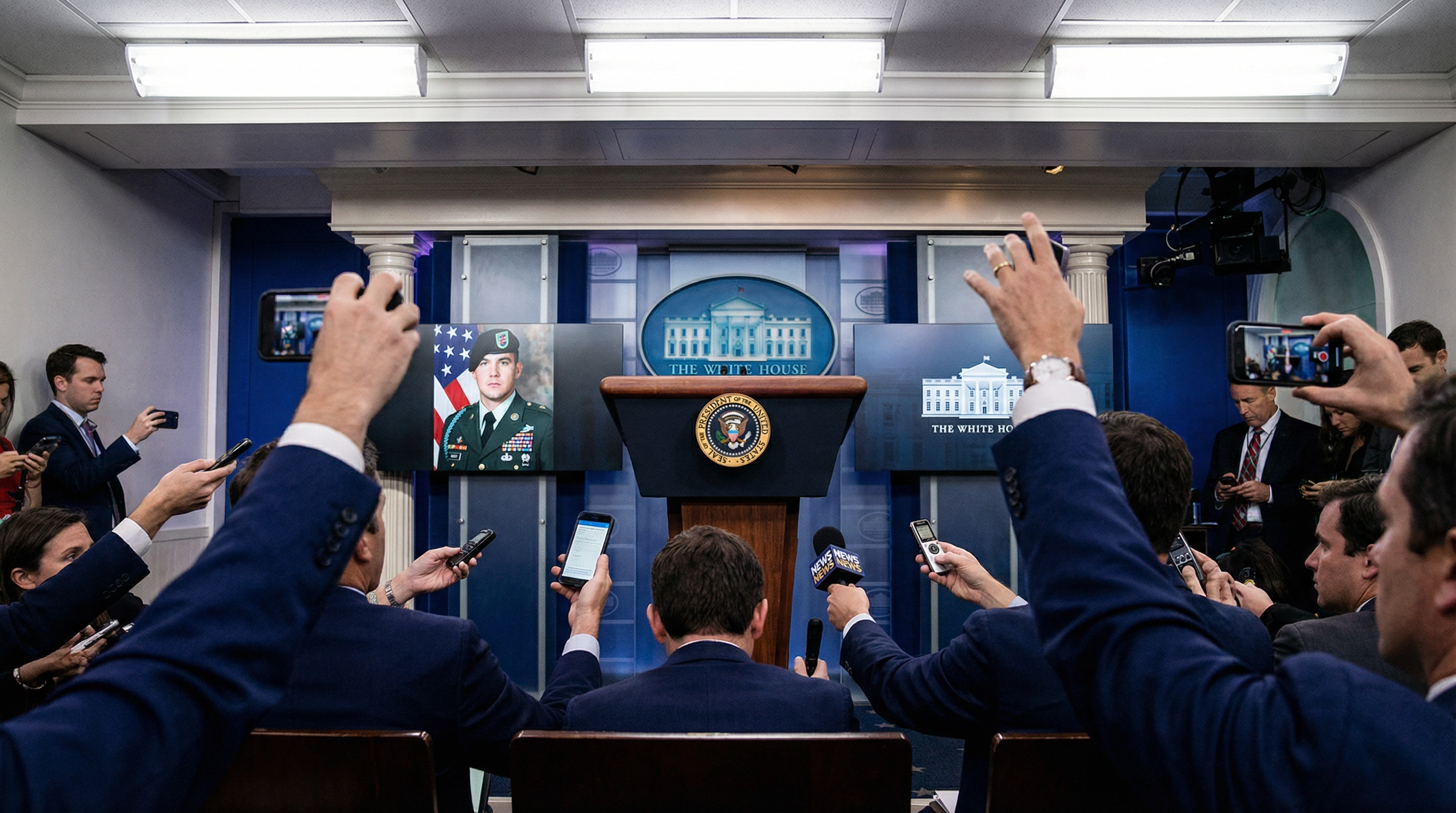
WASHINGTON — A dramatic rift within the Trump administration burst into public view on Tuesday when President Donald Trump launched a scathing attack on Joe Kent, his now-former Director of National Counterterrorism, who resigned over the administration's escalating war with Iran. Speaking at a White House event alongside Irish Taoiseach Micheál Martin, Trump dismissed Kent as "weak on security" and declared his departure "a good thing."
The confrontation marks the highest-profile resignation from the Trump administration since the Iran campaign began on February 28, and it exposes a growing fault line within the president's own national security apparatus. Kent, a decorated former Green Beret and Gold Star husband who was once a close Trump ally, submitted his resignation with a statement asserting that Iran did not pose a direct threat to the United States — a position that directly contradicts the administration's central justification for war.
"I always thought he was weak on security, and frankly, it's a good thing that he's out," Trump told reporters, visibly agitated by the question. "He put out a statement saying Iran was not a threat. Iran was a threat to every country. Military scholars have said for years that past presidents should have taken out Iran."
THE NUCLEAR ARGUMENT — Trump then pivoted to what has become his most forceful rhetorical defense of the war: the claim that military action against Iran prevented a nuclear catastrophe. The president launched into a lengthy criticism of the 2015 Iran nuclear deal negotiated under President Barack Obama, calling it "one of the worst deals ever made" and alleging that the agreement involved "planes loaded with hundreds of millions of dollars in cash" sent to Tehran.
"By terminating that deal, I prevented a nuclear holocaust," Trump asserted, a claim he has made repeatedly since the conflict began. The president argued that Iran's leadership would have used a nuclear weapon "within 24 hours" of obtaining one, characterizing the country's government as "vicious" and "violent."
Independent nuclear proliferation experts have offered a more nuanced assessment. While Iran had been steadily enriching uranium to near-weapons-grade levels before the conflict, most analysts estimated Tehran was still months away from assembling a functional warhead, and the decision to weaponize was far from certain. The International Atomic Energy Agency's last pre-war report indicated Iran had accumulated enough enriched uranium for multiple devices but had not yet taken the final technical steps toward weaponization.
A FRACTURED INNER CIRCLE — Kent's resignation is particularly significant because of his background. A former Army Special Forces soldier who served multiple combat tours, Kent lost his first wife, Navy cryptologist Shannon Kent, in a 2019 ISIS attack in Syria. He was elected to Congress in 2022 as a staunch Trump supporter and was subsequently appointed to lead the National Counterterrorism Center — a role that gave him direct access to classified intelligence on Iran's capabilities.
His departure suggests that the intelligence picture on Iran may be more complex than the administration's public messaging indicates. Several former intelligence officials have noted that Kent would have had access to the most sensitive assessments of Iran's actual threat posture, making his conclusion that Iran was "not a threat" particularly noteworthy.
"When your own counterterrorism chief — a combat veteran with full access to the intelligence — tells you the threat doesn't justify the war, that should give everyone pause," said a former senior CIA analyst who spoke on condition of anonymity. "This isn't some political appointee with an agenda. Kent is a true believer who clearly reached a breaking point."
BROADER IMPLICATIONS — The Kent resignation comes amid growing signs of internal dissent within the national security establishment over the scope and direction of the Iran campaign. While the administration has framed the conflict as a necessary preemptive strike against a nuclear-armed adversary, critics argue that the war has destabilized global energy markets, fractured the NATO alliance, and diverted critical resources from other security priorities.
Trump's decision to publicly attack a decorated veteran and former ally also carries political risks. Kent retains significant support among the populist and veteran communities that form a core part of Trump's political base. His resignation letter, which reportedly detailed specific intelligence assessments that contradicted the administration's public case for war, could become a focal point for congressional oversight efforts.
The president briefly contrasted his Iran policy with the financial support provided to Ukraine, suggesting that the billions spent on Kyiv's defense represented a less effective use of American resources than direct military action against Iran. The comparison underscored the administration's ongoing effort to reframe the Iran war as a more decisive and cost-effective approach to national security than the prolonged proxy conflict in Eastern Europe.
Frequently Asked Questions
Who is Joe Kent and why did he resign?
What did Trump say about Kent's resignation?
What is Trump's 'nuclear holocaust' argument?
How does Kent's resignation affect the Iran war politically?
Related Reports

US-Israel War on Iran Escalates: Intense Airstrikes, Civilian Toll, and Strait of Hormuz Mined
 James Harrington8 min read
China-Taiwan Tensions: Defense Budgets Rise as US Stockpile Depletion Raises Alarm
 Wei-Lin Chen8 min read
Europe and NATO Reject Trump's Hormuz Coalition: 'This Is Not Our War'
 Fatima Al-Rashid8 min read
Iran War Reshaping Strait of Hormuz: Global Energy Security at Critical Juncture
 Sarah Mitchell9 min read